

Sustainability · 2025
In this section51 topics
- Sustainability Policy3 items
- Sustainability Goals & UN SDGs3 items
- Policy Review3 items
- Business Value Chain1 item
- Stakeholder Analysis1 item
- Environmental Sustainability — Overview1 item
- Environmental Policy & Guidelines4 items
- Environmental Policy Review2 items
- Energy — Plan & Guidelines2 items
- Energy — Electricity Consumption1 item
- Energy — Fuel Consumption1 item
- Energy — Targets2 items
- Energy — Performance & Outcomes2 items
- Water — Plan & Guidelines2 items
- Water — Withdrawal, Discharge & Consumption1 item
- Water — Targets2 items
- Water — Performance & Outcomes2 items
- Waste — Plan & Guidelines2 items
- Waste — Generation, Disposal & Recycling1 item
- Waste — Targets1 item
- Waste — Performance & Outcomes2 items
- GHG — Plan & Guidelines2 items
- GHG — Emissions1 item
- GHG — Emissions Verification1 item
- GHG — Targets1 item
- GHG — Performance & Outcomes2 items
- Environmental Legal Incidents1 item
- Other Environmental Management1 item
- Social Sustainability — Overview1 item
- Social Policy & Guidelines4 items
- Social Policy Review2 items
- Social — Principles & Standards Practised1 item
- Human Rights Due Diligence3 items
- Employees — Plan & Guidelines3 items
- Employees — Workforce2 items
- Employees — Remuneration & Provident Fund1 item
- Employees — Training & Development1 item
- Employees — Occupational Health & Safety2 items
- Employees — Labour Relations2 items
- Employees — Employee Representation3 items
- Employees — Targets2 items
- Employees — Performance & Outcomes2 items
- Customers — Plan & Guidelines3 items
- Customers — Satisfaction Results1 item
- Customers — Targets2 items
- Customers — Performance & Outcomes2 items
- Community & Social — Plan & Guidelines3 items
- Community & Social — Targets1 item
- Community & Social — Performance & Outcomes2 items
- Law Violation Incidents1 item
- Law Violations — Case Detail & Corrective Measures1 item
Sustainability Policy
Has a Sustainability Policy
Yes
Policy Description
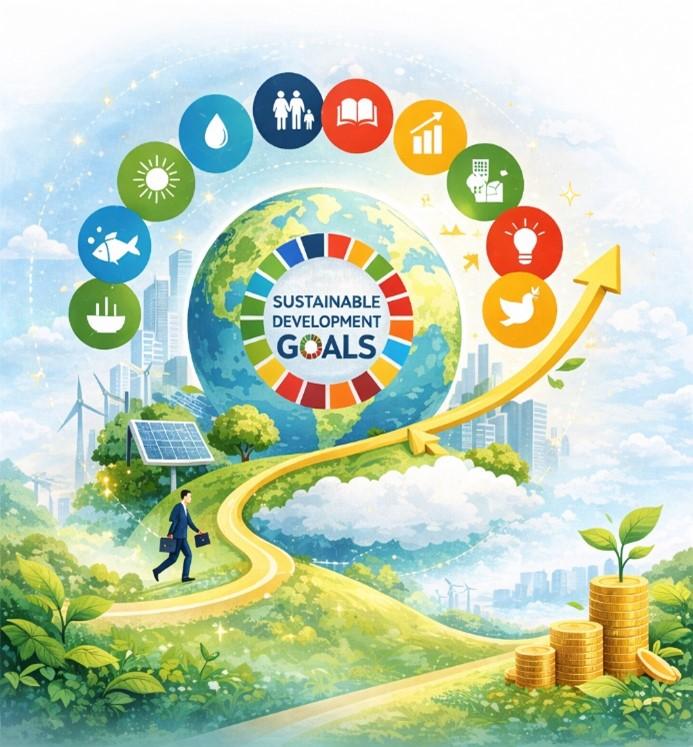 The Company emphasizes operating its construction business responsibly, taking into account environmental, social, and governance factors, alongside delivering quality work to appropriately meet customer needs, efficiently managing natural resource utilization, and promoting a balanced quality of life for employees and communities around the projects.
The Company is committed to developing the organization into a leading construction contractor that grows sustainably, operating with transparency, fairness, and responsibility towards all stakeholders to create long-term shared value and growth, adhering to development guidelines consistent with the United Nations Sustainable Development Goals (SDGs).
In addition, the Company prioritizes the full and transparent disclosure of sustainability information, preparing reports in accordance with the Stock Exchange of Thailand's reporting guidelines (SET Reporting Guide). to reflect its commitment to responsible business operations and the creation of sustainable value for the organization, shareholders, and society in the long term.
Policy Document Link
https://www.well-graded.com/csr_policy
Sustainability Goals & UN SDGs
Has Sustainability Goals
Yes
Goals Description
The Company has established sustainability policies and goals for the year 2025, in alignment with its business operations, based on the principles of sustainable development, as follows:
Environmental Aspect The Company promotes the reduction of greenhouse gas emissions by increasing the procurement of materials from partners certified as green factories and continuously expanding the use of clean energy through Solar Cell installations. This is to achieve Carbon Neutrality and drive the organization towards the Net Zero greenhouse gas emissions target by 2050, in line with the organization's long-term plan. Additionally, it implements a waste separation policy to reduce waste volume and efficiently increase recycling for beneficial use.
Social Aspect The Company continuously promotes employee potential development, while ensuring a safe and hygienic working environment, and treating employees fairly, equally, and without discrimination. Furthermore, it responsibly cares for communities around construction projects to create mutual benefits and sustainably enhance the quality of life for all stakeholders.
Corporate Governance Aspect The Company is committed to promoting transparent operations and has a joint anti-corruption policy.
Sustainability Goals
The Company aims for “the organization to develop into a sustainable business, where all employees understand and are aware of activities that foster environmental and social sustainability.”
UN Sustainable Development Goals
| SDG Goal |
|---|
| Goal 3 Good Health and Well-being |
| Goal 6 Clean Water and Sanitation |
| Goal 7 Affordable and Clean Energy |
| Goal 10 Reduce Inequalities |
| Goal 11 Sustainable Cities and Communities |
| Goal 13 Climate Action |
| Goal 16 Peace, Justice and Strong Institutions |
| Goal 17 Partnerships for the Goals |
Policy Review
Policy Reviewed This Year
Yes
Policy Changed This Year
Yes
Review Details
The Company annually reviews its operational policies and goals, including its sustainability management plan, to align with various changing factors. For the year 2025, the Company has reviewed its sustainability plans and goals, such as waste management operations and the development of worker accommodation and safety, to ensure alignment with the Company's business operations. This review was conducted at the Board of Directors Meeting No. 5/2567 on December 19, 2024. 
Business Value Chain
Value Chain Description
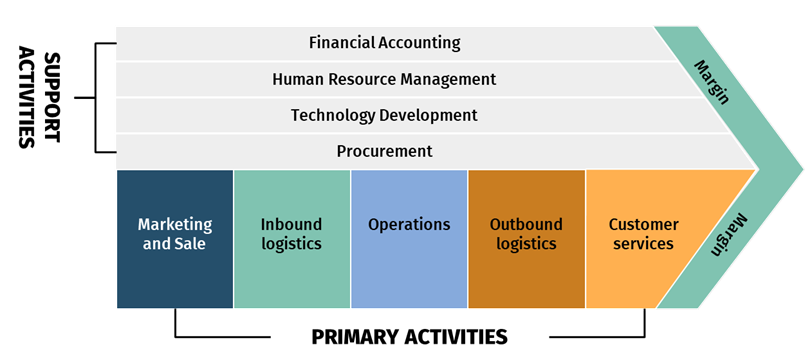
The Company operates a centralized business model with sequential operational activities, ranging from sales, design, production/service, delivery, and product/service support, to create value for stakeholders from upstream to downstream. Principles of sustainable business development and risk management are applied to define value chain management guidelines, aiming to mitigate risks and create opportunities, thereby strengthening the business. This involves considering the entire process, studying and complying with relevant laws, surveying project environments, and engaging with surrounding communities to disseminate information and foster good relationships. Understanding the business's value chain will help the business clearly identify which activities should be improved or developed specifically to create distinctiveness and competitive advantage. Activities within the value chain can be categorized into two types:
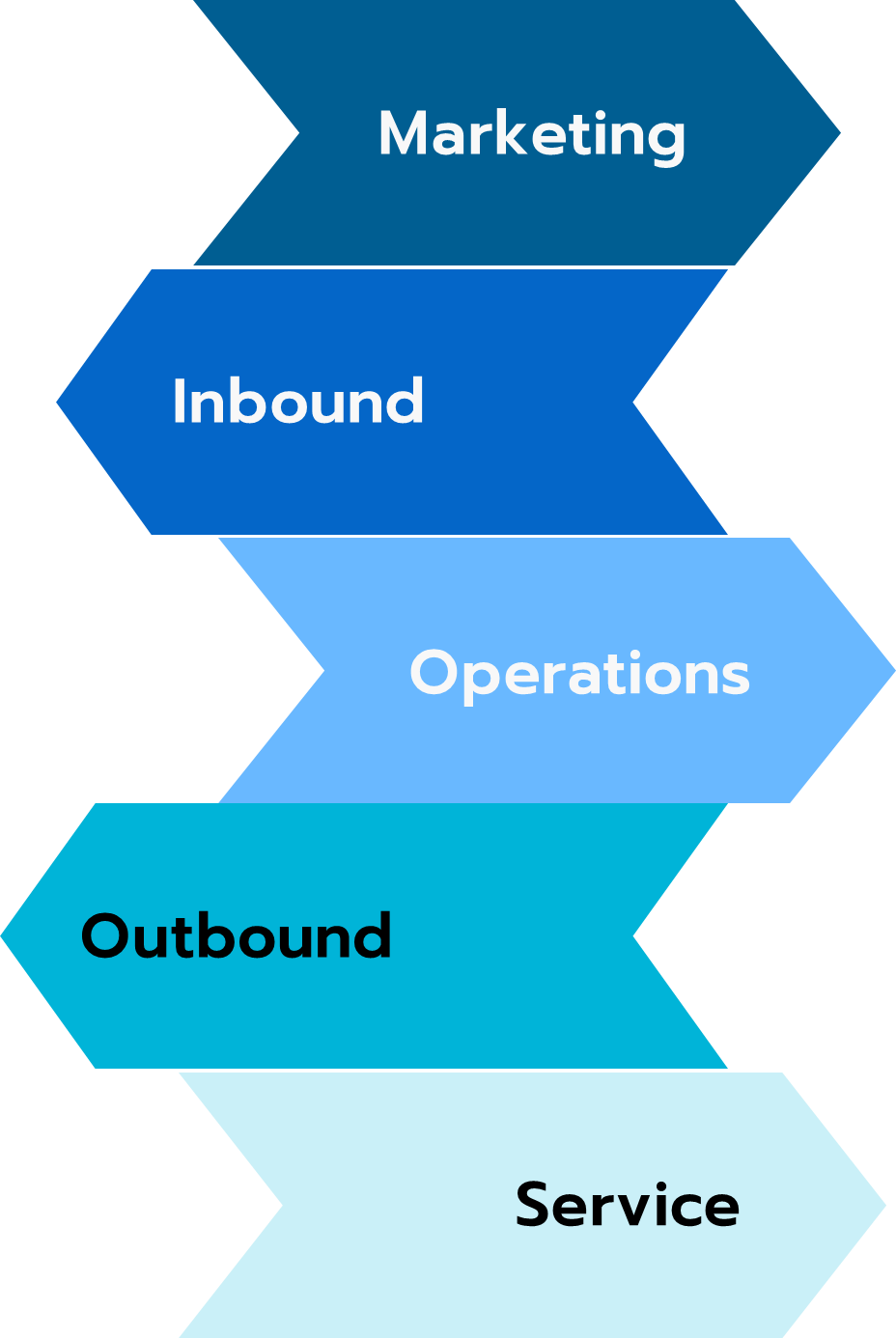
(1) Primary Activities Comprising 5 interconnected activities within the overall context of construction business operations.
Marketing
• Job acquisition: Seeking projects through various channels or acting as a representative for direct client inquiries.
• Cost estimation, specification review, and pricing.
• Bidding for projects through transparent and fair methods.
• Design: Designing buildings in compliance with legal requirements and customer needs.
Inbound
• Fundraising from financial institutions/funding sources.
• Workforce recruitment and manpower planning.
• Procurement: Focusing on sourcing materials specified by contractual terms and that are environmentally friendly.
Operations
• Contract management, ensuring operations are accurate, complete according to designs, and in line with customer agreements.
• Construction management, supervision, and inspection of construction work to meet international standards, reducing impacts on relevant stakeholders.
Outbound
• Project delivery, submitting progress claims according to the defined schedule, and delivering construction work that is high-quality, accurate, and complete according to contractual terms, minimizing impacts on relevant stakeholders.
Service
• After-sales service, providing construction warranty according to contractual terms to ensure customer satisfaction.
(2) Support activities These are support activities that enable the primary activities to be carried out effectively and efficiently. The Company operates meticulously and adheres to appropriate management criteria, encompassing accounting and finance, human resource management, technology development, procurement, and the analysis of operational data from various segments to foster innovation and technology development. These activities are integrated into all primary activities.
Stakeholder Analysis
Stakeholder Analysis
| Stakeholder Type | Stakeholders | Stakeholder Expectations | Response to Expectations | Communication Activities |
|---|---|---|---|---|
| External stakeholders | 2913 · Description: Shareholders | (1) Good performance under appropriate risk (2) Dividend payment (3) Transparent and verifiable business operations (4) Management based on good governance principles (5) Shareholder rights and equitable treatment of shareholders (6) Appropriate information disclosure and access to information | (1) Dividend Payment (2) Business Operations in Accordance with the Company's Good Corporate Governance Principles (3) Transparent Information Disclosure | 2939 · Description: Press Release · 2941 · Description: Online Communication · 2944 · Description: Annual General Meeting (AGM) |
| Internal stakeholders | 2921 · Description: Employees | (1) Job security and career advancement opportunities (2) Appropriate and fair compensation and benefits (3) Positive work atmosphere and environment (4) Workplace safety (5) Channels for feedback and complaints (6) Personal data governance | (1) Promote and develop personnel capabilities in various areas. (2) Efficiently evaluate performance to determine appropriate compensation. (3) Provide appropriate and fair compensation consistent with performance. (4) Comply with safety, occupational health, and working environment policies to ensure a hygienic workplace. (5) Establish channels for feedback and complaints, along with whistleblower protection measures. (6) Comply with the PDPA Act. | 2941 · Description: Online Communication · 2942 · Description: Internal Meeting · 2945 · Description: Complaint Reception · 2947 · Description: Satisfaction Survey · 2948 · Description: Training / Seminar |
| External stakeholders | 2923 · Description: Customers | (1) Receiving quality services and deliverables that meet standards (2) Receiving services at a fair price within the allocated budget (3) Timely delivery of work as per agreement (4) Maintaining customer confidentiality (5) Providing after-sales service (6) Using environmentally friendly materials and equipment | (1) Good corporate governance and business ethics (2) Development of the company's capabilities in various areas, such as construction innovation, tools, machinery, and personnel (3) Work quality inspection process, ensuring delivery to customers according to contractual terms (4) Construction warranty (5) Selection of materials from partners with environmentally friendly production processes (6) Implementation of an anti-corruption policy | 2940 · Description: Social Event · 2941 · Description: Online Communication · 2943 · Description: External Meeting |
| External stakeholders | 2899 · Description: Suppliers | (1) Transparent partner selection process (2) Fair terms and pricing (3) Compliance with trade terms (4) Good partnership and long-term relationships (5) Confidentiality of partners (6) Channels for feedback and complaints | (1) Good corporate governance and business ethics (2) Compliance with the company's procurement policy (3) Compliance with the company's anti-corruption policy (4) Knowledge development with business partners and maintaining good relationships (5) Establishment of channels for feedback and complaints, along with whistleblower protection measures | 2941 · Description: Online Communication · 2943 · Description: External Meeting |
| External stakeholders | 2894 · Description: Creditor · 2900 · Description: Business partners · 2925 · Description: Financial institution | (1) Strong financial performance (2) Transparent and auditable business operations in accordance with good corporate governance (3) Financial discipline | (1) Good Corporate Governance and Ethical Business Conduct; (2) Strict Compliance with Stipulated Conditions | 2938 · Description: Visit · 2939 · Description: Press Release · 2941 · Description: Online Communication |
| External stakeholders | 2898 · Description: Competitors | (1) Fair competition (2) Not taking any action that restricts the rights of competitors | (1) Good corporate governance and adherence to business ethics. (2) Operate within the framework of fair competition. (3) Refrain from any acts that infringe upon intellectual property. | 2939 · Description: Press Release · 2941 · Description: Online Communication |
| External stakeholders | 2902 · Description: Community · 2928 · Description: Society | (1) Support various community activities (2) Operate safely and minimize impact on community, society, and environment (3) Community activity support (4) Channels for feedback and complaints | (1) Good corporate governance and business ethics (2) Adherence to safety, occupational health, and environmental policies (3) Collaboration in various activities with surrounding communities (4) Promotion of employee awareness and responsibility towards society and the environment (5) Establishment of channels for feedback and complaints, along with measures to protect whistleblowers | 2941 · Description: Online Communication |
| External stakeholders | 2931 · Description: Government agencies and Regulators | (1) Comply with relevant laws and regulations in the company's business operations. (2) Cooperate with governmental measures. | (1) Good Corporate Governance and Ethical Business Conduct (2) Promoting cooperation in combating corruption and unfair expenses (3) Compliance with laws and government regulations | 2941 · Description: Online Communication |
Environmental Sustainability — Overview
Operating Results — Introduction
The Company recognizes and prioritizes the increasingly severe climate change situation at present. Therefore, it participates in addressing global changes by reducing environmental impacts and complying with relevant laws. This reflects the Company's strong management capabilities, as well as its commitment to analyzing and monitoring greenhouse gas emissions to inform decision-making for future target setting and operational plans.
Environmental Policy & Guidelines
Has an Environmental Policy
Yes
Policy Description
The Company prioritizes participation in the utilization of natural resources and recognizes its environmental responsibilities, particularly regarding potential environmental impacts from its business operations. It also instills a positive consciousness in employees and fosters an organizational culture by encouraging employees to cherish and protect natural resources and the community's environment. This is considered a primary mission to create beneficial projects and activities for environmental development. The Company is committed to conducting business with consideration for the impact on natural resources, environmental conditions, and public welfare.
The Company has begun collecting data related to electricity consumption, water usage, and waste volume. Additionally, dust, noise, and vibration are monitored at construction sites to control pollution arising from construction processes. Measures to reduce greenhouse gas emissions are also in place. This data is used for analysis and to identify causes, enabling the formulation of methods and policies to mitigate environmental impacts. Furthermore, the Company is committed to promoting and instilling a consciousness of quality, occupational health and safety, and environmental awareness as an operational practice among its personnel, for the benefit of all departments, as well as the community and society as a whole.
Supports Sustainable Development Goals (SDGs).
The Company operates in multiple dimensions of sustainability, supporting Sustainable Development Goals, which contribute to business growth by elevating construction management and design standards through professional teams for good and sustainable quality. Therefore, the Company aims to create widely accepted works by considering the impact on all stakeholders, to drive sustainable growth and earn long-term trust and acceptance from customers, partners, and alliances.
Environmental Goals for 2025
The Company is committed to conducting environmentally friendly business in line with sustainable development guidelines, adhering to principles and practices based on social responsibility. This involves fostering participation, building trust with stakeholders through transparent operations, and continuously prioritizing the development of innovation and technology to ensure stable and sustainable business growth across three dimensions: Environment, Social, and Governance (ESG). In response to sustainable development goals, the Company has established the following environmental strategic framework and objectives.
Collects data on electricity consumption, water usage, and paper consumption in the office, and presents it to relevant parties to campaign for efficient resource utilization.
Supports the development and procurement of technology for adoption in work processes to help reduce environmental impacts.
Reduces greenhouse gas emissions from document recycling by submitting them to certified document destruction service centers for confidential document control.
Operates strictly in accordance with environmental laws, regulations, and rules.
Promotes the use of renewable energy in the Company's office areas and prepares for a transition to a low-carbon society.
Environmental Management Guidelines
The Company has appointed a Sustainability Working Group to oversee sustainability operations, covering all levels from management to operational, to ensure effective integration in line with its goals. This group is responsible for proposing sustainable development guidelines to the Executive Committee and the Board of Directors, facilitating development and review processes to ensure modernization in accordance with international standards. The Company is committed to actively and continuously participating in social responsibility regarding quality, occupational health and safety, and environmental matters, as well as maximizing the beneficial use of natural resources. It recognizes the importance of the environment and the safety of relevant stakeholders, and promotes social activities for environmental preservation and improving the quality of life in communities, in accordance with sustainable development principles. The Company's environmental care guidelines are disclosed on its website. www.well-graded.com and disseminates this information to all employees within the organization via the Intranet, including inviting and publicizing knowledge on energy usage to make employees aware of the importance of the environment and help reduce the consumption of natural resources.
Policy Document Link
https://www.well-graded.com/csr_policy
Environmental Guidelines
| Guideline |
|---|
| Electricity Management |
| Water Management |
| Waste Management |
| Greenhouse Gas and Climate Change Management |
Environmental Policy Review
Policy Reviewed This Year
Yes
Review Details
The Board of Directors' Meeting No. 4/2567, held on November 14, 2024, reviewed the corporate governance policy and other key policies. It was determined that the policies remain comprehensive, are appropriate for the current situation, and there is no significant reason to implement changes.
Energy — Plan & Guidelines
Has an Energy Management Plan
Yes
Plan Description
The company has prioritized electricity conservation since 2020. This initiative includes the installation of a 20 kWh solar rooftop power generation system, with the objective of ensuring that electricity consumption does not exceed the previous year's level. A specific target has been set to achieve at least a 10% reduction by 2026, complemented by ongoing campaigns to promote energy conservation within the head office.
Energy — Electricity Consumption
Electricity Consumption
| Metric | Current Year | Previous Year | Two Years Ago |
|---|---|---|---|
| Total electricity consumption within the organization (Kilowatt-Hours) | 122,513 | 137,355 | 1,698,930 |
| Electricity purchased for consumption from non-renewable energy sources (Kilowatt-Hours) | 122,513 | 137,355 | 1,698,930 |
| Electricity purchased or generated for consumption from renewable energy sources (Kilowatt-Hours) | 0 | 0 | 0 |
Energy — Fuel Consumption
Fuel Consumption
| Metric | Current Year | Remark |
|---|---|---|
| Crude oil (Barrels) | ||
| Coal (Metric tonnes) | ||
| Jet fuel (Litres) | ||
| Diesel (Litres) | 351,218.31 | Diesel consumption data for the factory began to be collected in 2025 as the first year. Greenhouse gas emissions from the company's operational activities were calculated, resulting in 947,832.85 kg CO2e. |
| Gasoline (Litres) | 1,925.72 | The factory's gasoline consumption data collection commenced in 2025, marking the first year. Greenhouse gas emissions from the company's operational activities were calculated, resulting in 4,371.38 kg CO2e. |
| Fuel oil (Litres) | ||
| Natural gas (Standard cubic feet) | ||
| LPG (Kilograms) | ||
| Steam (Metric tonnes) |
Energy — Targets
Has Set Targets
Yes
Targets
| Target | Base Year | Base Year Value | Target Year | Target Year Value | Target Change (%) | Unit |
|---|---|---|---|---|---|---|
| Reduction of electricity purchased for consumption | 2,024 | 137,355 | 2,025 | 122,513 | 12.11 | Kilowatt-hour |
Energy — Performance & Outcomes
Has Performance Results
Yes
Performance Description
Electricity consumption management.
In 2025, the company's electricity consumption was. Office section. A total of 122,513 kilowatt-hours. The electricity consumption for 2024 was 137,355 kilowatt-hours. Comparing 2025 with 2024, the result is a reduction in electricity consumption of 14,842 kilowatt-hours, representing 12.11%.
In 2025, the company began collecting data for the first year regarding electricity consumption. Project section. A total of 1,633,978.94 kilowatt-hours. This amount has been compared to the kilowatt-hours per square meter of the area, with the 2025 data being 4.999 kilowatt-hours per square meter. The target is to reduce this by at least 10% compared to the base year, with 2025 designated as the base year data.
In 2025, the company began collecting data for the first year regarding electricity consumption. Factory section. A total of 195,723 kilowatt-hours. This amount has been compared to the kilowatt-hours per square meter of the area, with the 2025 data being 7.196 kilowatt-hours per square meter. The target is to reduce this by at least 10% compared to the base year, with 2025 designated as the base year data.
The campaign to promote electricity saving is as follows:
1. Measures for controlling air conditioner usage.
1.1 Timed on/off operation.
-
Operate on/off at appropriate times: 07:30-12:00 and 13:00-18:00.
1.2 Use sparingly, sufficiently, and only when necessary.
-
Operate air conditioners at an appropriate temperature, specifically between 25-26 degrees Celsius.
-
Adjust air conditioner operating modes and functions appropriately.
-
Activate only the necessary sections where work is being performed.
-
Choose air conditioners with energy-saving labels or Eco certification.
-
Select air conditioners with BTU sizes appropriate for the area and operational rooms.
1.3 Maintenance and upkeep.
-
Regularly clean the heat exchange coils and cooling coils.
-
Regularly clean the air filters that trap dust.
-
Plant trees, install heat-resistant film, or use sun blinds to reduce heat entering the workspace.
-
Regularly inspect and check for leaks in the refrigerant piping system.
-
Maintain and service air conditioners to ensure operational readiness.
2. Measures for controlling lighting and computer electricity usage.
2.1 Timed on/off operation.
-
Operate on/off at appropriate times: 07:30-12:00 and 13:00-18:00.
2.2 Use sparingly, sufficiently, and only when necessary.
-
Turn on lights only as necessary for the sections where work is being performed.
-
Turn on lights in corridors only where work is being performed.
-
Turn on bathroom lights and exhaust fans only when in use.
-
Install solar panels to utilize electricity from sunlight during working hours.
-
Replace incandescent light bulbs with LED or energy-saving labeled/Eco-certified types.
-
Reduce the wattage of light bulbs and opt for lower-wattage LED bulbs that provide sufficient illumination.
-
Replace wired light bulbs with SOLA CALL type.
-
Turn off computer screens during every lunch break.
-
Replace desktop computers with notebooks.
-
Unplug and turn off switches whenever not in use.
2.3 Maintenance and upkeep.
-
Annually inspect and check electrical systems and equipment.
-
Daily inspection for damaged or non-operational points.
-
Conduct daily 5S activities.
Water — Plan & Guidelines
Has a Water Management Plan
Yes
Plan Description
The Company manages water, implementing campaigns to promote energy conservation within the head office, fostering employee awareness regarding the value of prudent water usage, and appropriately controlling water consumption. The objective is to reduce water consumption by no less than 10% compared to the previous year. This also encompasses regular inspections for leaks in water pipes at each location. Furthermore, data on water consumption is collected for continuous analysis and control planning.
Water — Withdrawal, Discharge & Consumption
Water Withdrawal, Discharge & Consumption
| Metric | Current Year | Previous Year | Two Years Ago |
|---|---|---|---|
| Total water withdrawal (Cubic meters) | 1,925 | 2,370 | 1,960 |
| Total water withdrawal by third-party water (Cubic meters) | 1,925 | 2,370 | 1,960 |
| Total water withdrawal by surface water (Cubic meters) | 0 | 0 | 0 |
| Total water withdrawal by groundwater (Cubic meters) | 0 | 0 | 0 |
| Total water withdrawal by seawater (Cubic meters) | 0 | 0 | 0 |
| Total water withdrawal by produced water (Cubic meters) | 0 | 0 | 0 |
| Percentage of wastewater treated before discharge (%) | |||
| Total water discharge (Cubic meters) | |||
| Total water discharge to third-party water (Cubic meters) | |||
| Total water discharge to surface water (Cubic meters) | |||
| Total water discharge to groundwater (Cubic meters) | |||
| Total water discharge to seawater (Cubic meters) | |||
| Total water consumption (Cubic meters) | 1,925 | 2,370 | 1,960 |
| Recycled water (Cubic meters) |
Water — Targets
Has Set Targets
Yes
Targets
| Target | Base Year | Base Year Value | Target Year | Target Year Value | Target Change (%) | Unit |
|---|---|---|---|---|---|---|
| Reduction of water withdrawal | 2,024 | 2,370 | 2,025 | 1,925 | 23.12 | Cubic meters |
Water — Performance & Outcomes
Has Performance Results
Yes
Performance Description
Water resource utilization.
In 2025, the company's water consumption for general use was 1,925 cubic meters. The water consumption for 2024 was 2,370 cubic meters. Comparing 2025 with 2024, the result is a reduction in water consumption by 445 cubic meters, equivalent to 23.12%. For 2026, water consumption per person will be calculated for data comparison.
In 2025, the company began collecting data for the first time. The water consumption for the project was 68,081 cubic meters. For 2026, water consumption per person will be calculated for data comparison.
In 2025, the company began collecting data for the first time. The water consumption for the factory was 7,721 cubic meters. For 2026, water consumption per person will be calculated for data comparison.
The company raises awareness among employees about the value of economical water use through public relations and appropriate water consumption control, as follows:
Reduce water consumption.
-
Use dual-flush toilets with two flushing options to ensure appropriate water usage.
-
Inspect and check water piping systems, faucets, joints, and leaks.
-
Repair and maintain equipment that is not operational or damaged.
-
Turn off faucets and do not let water run while scrubbing/removing stains.
-
Use containers for thawing raw materials, without using the method of running water.
-
Instruct housekeepers to use buckets instead of hoses when cleaning restrooms.
-
Provide knowledge on economical water usage methods through the company's communication channels.
Waste — Plan & Guidelines
Has a Waste Management Plan
Yes
Plan Description
emphasizes quality operations, waste management, and reduction of environmental impact, in compliance with relevant laws. This reflects the company's strong management capabilities, with guidelines for managing pollution from operations, waste management, and waste management from project areas through reuse, beneficial recycling, and reducing pollution to nature and surrounding communities.
including the establishment of paper reduction. Technology has been implemented to help reduce resource consumption in the operational processes of various departments, such as the adoption of an e-Signature system within the organization to streamline approval processes and encourage employees to use paper and office supplies efficiently.
Waste — Generation, Disposal & Recycling
Waste Generation, Disposal & Recycling
| Metric | Current Year | Previous Year | Two Years Ago | Remark |
|---|---|---|---|---|
| Total waste generated (Kilograms) | 8,470 | 9,267.8 | 8,347 | |
| Non-hazardous waste (Kilograms) | 9,267.8 | 8,347 | (3) The company destroys confidential documents, accounting documents, and various important documents, subjecting them to a sorting and shredding process by Papers Recycle, a certified document destruction service center with standards for controlling confidential documents and preventing their disclosure to third parties. Reducing paper consumption helps to decrease tree felling and forest clearing for planting fast-growing trees to produce more paper pulp. This is an excellent option for environmental conservation, reducing tree felling, energy consumption, waste emissions, and global warming. Reason: Due to the company opening more subsidiary companies. | |
| Non-hazardous waste - Landfilling (Kilograms) | ||||
| Non-hazardous waste - Incineration (with energy recovery) (Kilograms) | ||||
| Non-hazardous waste - Incineration (without energy recovery) (Kilograms) | ||||
| Non-hazardous waste - Other disposal operations (Kilograms) | ||||
| Hazardous waste (Kilograms) | ||||
| Hazardous waste - Landfilling (Kilograms) | ||||
| Hazardous waste - Incineration (with energy recovery) (Kilograms) | ||||
| Hazardous waste - Incineration (without energy recovery) (Kilograms) | ||||
| Hazardous waste - Other disposal operations (Kilograms) | ||||
| Total reused/recycled waste (Kilograms) | ||||
| Reused/Recycled non-hazardous waste (Kilograms) | ||||
| Reused non-hazardous waste (Kilograms) | ||||
| Recycled non-hazardous waste (Kilograms) | ||||
| Reused/Recycled hazardous waste (Kilograms) | ||||
| Reused hazardous waste (Kilograms) | ||||
| Recycled hazardous waste (Kilograms) |
Waste — Targets
Has Set Targets
No
Waste — Performance & Outcomes
Has Performance Results
Yes
Performance Description
Waste, refuse, and operational pollution management
The company prioritizes quality operations, reducing environmental impacts and climate change effects by adhering to relevant laws. This reflects the company's strong management capabilities. The company has guidelines for managing operational pollution, waste, and refuse as follows:
-
Installation of dust prevention systems around construction buildings to prevent dust dispersion outside the building, thereby avoiding dust affecting the hygiene of nearby communities.
-
Installation of fall protection systems from construction floors.
-
Controlling noise levels to prevent disturbance, nuisance, or health impacts on nearby communities by measuring sound levels during peak operational periods.
-
Controlling vibrations to prevent disturbance and adverse effects on physical health or property damage, and to avoid causing nuisance to surrounding communities.
-
The company treats wastewater to meet specified standards before discharging it into public areas.
-
Transport vehicle wheels are washed before leaving the project site to prevent road pollution.
-
Transport vehicles are inspected and maintained according to scheduled intervals to reduce pollution.
-
Waste segregation is implemented within the construction project. Efforts are made to reduce waste and consumables, and waste is segregated through collaborative activities between the company and suppliers for processing waste and leftover materials for reuse, bringing benefits to the project. This also contributes to environmental conservation and reduces pollution to nature and surrounding communities.
The company underwent an assessment of its wastewater discharge measurement reports in accordance with the Ministry of Industry's announcement on establishing standards for controlling wastewater discharge from factories B.E. 2560 (2017). Measurement results were collected from January to December 2025, and the wastewater quality results comply with the specified standards. (“ Pass ”) No values exceeded the specified standards.
| Item | Standard | Unit | Year 2025 | |||||||||||
| Jan. | Feb. | Mar. | Apr. | May. | Jun. | Jul. | Aug. | Sep. | Oct. | Nov. | Dec. | |||
| Acidity - Alkali | 5.5 – 9.0 | - | 7.0 | 7.0 | 7.1 | 6.8 | 7.0 | 6.4 | 6.7 | 6.8 | 6.9 | 6.3 | 6.5 | 6.6 |
| Total dissolved solids (TDS) | ≤ 3 ,000 | mg/l | 404 | 386 | 287 | 272 | 324 | 368 | 336 | 356 | 486 | 256 | 243 | 216 |
| Total suspended solids (TSS) | ≤ 50 | mg/l | 48 | 44 |
| 48 | 48 | 49 | 47 | 48 | 44 | 48 | 46 | 44 |
| BOD (BOD) | ≤ 20 | mg/l | 5.2 | 6.4 | 8.9 | 8.4 | 10.2 | 12.8 | 13.4 | 16.8 | 14.8 | 17 | 16 | 15 |
| COD (COD) | ≤ 120 | mg/l | 6 | 7 | 11.6 | 10.6 | 16.4 | 19.6 | 20.6 | 24.2 | 20 | 32 | 28 | 26 |
| Sulfide | ≤ 1 | mg/l | <1.0 | <1.0 | <1.0 | <1.0 | <1.0 | <1.0 | <1.0 | <1.0 | <1.0 | <1.0 | <1.0 | <1.0 |
| Oil and grease | ≤ 5 | mg/l | 4 | 4 | 4 | 4 | 4 | 4 | 3 | 3 | 2 | 4 | 3 | 2 |
| TKN | ≤ 100 | mg/l | 2.97 | 3.04 | 7.2 | 5.6 | 8.2 | 11.4 | 12.2 | 18.4 | 16.4 | 24.6 | 22.3 | 20.4 |
| Inspection results | Pass | Pass | Pass | Pass | Pass | Pass | Pass | Pass | Pass | Pass | Pass | Pass | ||
Note: Environmental quality measurement results report at the central warehouse of Well Grade Engineering Public Company Limited.
Paper Reduction
The company's paper usage is divided into two parts as follows:
-
For the office section, paper usage in 2025 was 2,151.36 units/kilogram, while in 2024 it was 2,000.50 units/kilogram. Comparing 2025 to 2024, paper usage increased by +150.86 units/kilogram, representing a +7.01% increase.
-
For the project and factory sections, paper usage in 2025 was 6,319.62 units/kilogram, while in 2024 it was 7,267.35 units/kilogram. Comparing 2025 to 2024, paper usage decreased by -947.73 units/kilogram, representing a 15% reduction.
-
Utilizing electronic channels instead of paper
-
Utilizing a paperless meeting system, where numerous meeting/training documents are uploaded to the website or sent via email.
-
Utilizing social media channels such as Group Line / Facebook instead of physical announcements/informational documents / public relations
-
Storing documents electronically instead of photocopying.
-
Utilizing file sharing via shared drives in the office and projects instead of printing and photocopying.
-
Maximize paper usage (1 page or more).
-
Segregating documents used on only one side and establishing collection points in common areas.
-
Collected paper is reused as notepads/notebooks instead of post-it notes.
-
Reused paper must not be for formal purposes or internal departmental/divisional communications.
GHG — Plan & Guidelines
Has a GHG Management Plan
Yes
Plan Description
The Company aims for environmentally friendly business operations. Data collection on electricity consumption, water usage, and paper usage is conducted to ensure appropriate efficiency in line with the nature of its business operations. Environmental impacts from the Group's operations are regularly monitored and assessed. Furthermore, channels are provided for receiving complaints from stakeholders, enabling the Group to promptly address and plan to prevent potential impacts in an appropriate manner. The Company has calculated the carbon dioxide emissions from electricity, water, oil, and paper consumption for the year 2025 as follows:
GHG — Emissions
GHG Emissions
| Metric | Current Year | Previous Year | Two Years Ago | Remark |
|---|---|---|---|---|
| Total GHG emissions (Metric tonnes of carbon dioxide equivalent) | 2,067 | 84.83 | 100.41 | |
| Total greenhouse gas emissions 1 (Metric tonnes of carbon dioxide equivalent) | 61.34 | 76.55 | 94 | Electricity, tap water, and paper consumption within the head office premises. |
| Total greenhouse gas emissions 2 (Metric tonnes of carbon dioxide equivalent) | 955.68 | 8.28 | 6.41 | Electricity, water, and paper consumption within the project scope. The company began systematically collecting data on electricity and water consumption from 2025 onwards. As a result, the data for 2023 and 2024 differs from that of 2025, as this period marked the initial phase of developing the aforementioned data collection system. |
| Total greenhouse gas emissions 3 (Metric tonnes of carbon dioxide equivalent) | 1,049.98 | Electricity and tap water consumption, and the volume of gasoline and diesel consumption within the factory premises. The company has systematically commenced collecting data on electricity and tap water consumption, and the volume of gasoline and diesel consumption within the factory premises, starting from 2025 onwards. |
GHG — Emissions Verification
Emissions Verified by a Third Party
No
GHG — Targets
Has Set GHG Targets
No
GHG — Performance & Outcomes
Has Performance Results
Yes
Performance Description
Electricity consumption :
-
Office electricity consumption: In 2025, greenhouse gas emissions from the company's operations were calculated, resulting in 57,360.59 kg CO2e. Compared to 2024, the result was a decrease of -15,135.38 kilograms of carbon dioxide per year, representing 20.88%.
| Electricity consumption data | 2020 | 2021 | 2022 | 2023 | 2024 | 2025 |
| Consumption - Office (1 unit/kWh) | 194,934.00 | 201,441.00 | 168,783.00 | 169,893.00 | 137,355.00 | 122,513.00 |
| CO2 Emission (Kg CO2e) | 102,886.17 | 106,320.56 | 89,083.67 | 89,669.53 | 72,495.97 | 57,360.59 |
| Increase (decrease) % from previous year | +11.45% | +3.33% | -16.21% | +0.66% | -19.15% | -20.88% |
Note: Emission factor for electricity consumption (Thailand) is 0.4682 kg CO2/kWh
-
Project electricity consumption: Data collection started in 2025 for the first time. Greenhouse gas emissions from the company's operations were calculated, resulting in 765,028.99 kg CO2e.
| Electricity consumption data | 2020 | 2021 | 2022 | 2023 | 2024 | 2025 |
| Consumption - Project (1 unit/kWh) Data collection started in the first year | n/a | n/a | n/a | n/a | n/a | 1,633,979 |
| CO2 Emission (Kg CO2e) | n/a | n/a | n/a | n/a | n/a | 765,028.99 |
| Increase (decrease) % from previous year | n/a | n/a | n/a | n/a | n/a | - |
Note: Emission factor for electricity consumption (Thailand) is 0.4682 kg CO2/kWh
-
Factory electricity consumption: Data collection started in 2025 for the first time. Greenhouse gas emissions from the company's operations were calculated, resulting in 894,362.19 kg CO2e.
| Electricity consumption data | 2020 | 2021 | 2022 | 2023 | 2024 | 2025 |
| Consumption - Factory (1 unit/kWh) Data collection started in the first year | n/a | n/a | n/a | n/a | n/a | 195,723 |
| CO2 Emission (Kg CO2e) | n/a | n/a | n/a | n/a | n/a | 91,637.51 |
| Increase (decrease) % from previous year | n/a | n/a | n/a | n/a | n/a | - |
Note: Emission factor for electricity consumption (Thailand) is 0.4682 kg CO2/kWh
Water consumption :
-
Head office water consumption: In 2025, greenhouse gas emissions from the company's operations were calculated, resulting in 1,529.99 kg CO2e. Compared to 2024, the result was a decrease of -139.20 kilograms of carbon dioxide per year, representing -8%.
| Tap water consumption data | 2020 | 2021 | 2022 | 2023 | 2024 | 2025 |
| Consumption - Office (1 unit/cubic meter) | 1,679.00 | 1,596.00 | 1,530.00 | 1,960.00 | 2,370.00 | 1,925.00 |
| CO2 Emission (Kg CO2e) | 1,182.52 | 1,124.06 | 1,077.58 | 1,380.43 | 1,669.19 | 1529.99 |
| Increase (decrease) % from previous year | -35% | -4.94% | -4.14% | +28.10% | +21% | -8% |
Note: Emission factor for tap water consumption is 0.7948 kg CO2/cubic meter
-
Project water consumption: Data collection started in 2025 for the first time. Greenhouse gas emissions from the company's operations were calculated, resulting in 54,110.78 kg CO2e.
| Tap water consumption data | 2020 | 2021 | 2022 | 2023 | 2024 | 2025 |
| Consumption - Project (1 unit/cubic meter) Data collection started in the first year | n/a | n/a | n/a | n/a | n/a | 68,081 |
| CO2 Emission (Kg CO2e) | n/a | n/a | n/a | n/a | n/a | 54,110.78 |
| Increase (decrease) % from previous year | n/a | n/a | n/a | n/a | n/a | - |
Note: Emission factor for tap water consumption is 0.7948 kg CO2/cubic meter
-
Factory water consumption: Data collection started in 2025 for the first time. Greenhouse gas emissions from the company's operations were calculated, resulting in 6,136.65 kg CO2e.
| Tap water consumption data | 2020 | 2021 | 2022 | 2023 | 2024 | 2025 |
| Consumption - Factory (1 unit/cubic meter) Data collection started in the first year | n/a | n/a | n/a | n/a | n/a | 7,721 |
| CO2 Emission (Kg CO2e) | n/a | n/a | n/a | n/a | n/a | 6,136.65 |
| Increase (decrease) % from previous year | n/a | n/a | n/a | n/a | n/a | - |
Note: Emission factor for tap water consumption is 0.7948 kg CO2/cubic meter
Fuel consumption :
-
<1v8Iic63hUyU>
| Diesel consumption data | 2020 | 2021 | 2022 | 2023 | 2024 | 2025 |
| Consumption - Factory (1 unit/liter) Data collection started in the first year | n/a | n/a | n/a | n/a | n/a | 351,218.31 |
| CO2 Emission (Kg CO2e) | n/a | n/a | n/a | n/a | n/a | 947,832.85 |
| Increase (decrease) % from previous year | n/a | n/a | n/a | n/a | n/a | - |
Note: Emission factor for diesel consumption is 2.6987 kg CO2/cubic meter
-
Factory gasoline consumption: Data collection started in 2025 for the first time. Greenhouse gas emissions from the company's operations were calculated, resulting in 4,371.38 kg CO2e.
| Gasoline consumption data | 2020 | 2021 | 2022 | 2023 | 2024 | 2025 |
| Consumption - Factory (1 unit/liter) Data collection started in the first year | n/a | n/a | n/a | n/a | n/a | 1,925.72 |
| CO2 Emission (Kg CO2e) | n/a | n/a | n/a | n/a | n/a | 4,371.38 |
| Increase (decrease) % from previous year | n/a | n/a | n/a | n/a | n/a | - |
Note: Emission factor for gasoline consumption is 2.2700 kg CO2/cubic meter
Paper consumption :
Paper consumption: Carbon dioxide emissions from paper consumption in 2025 are calculated in two parts as follows:
-
For the office, the result is 2,452.55 Kg CO2e. Compared to 2024, there was an increase of 71.89 kilograms of carbon dioxide per year, representing +3%.
-
For projects and factories, the result is 7,204.37 Kg CO2e. Compared to 2024, there was a decrease of 947.73 kilograms of carbon dioxide per year, representing 13%.
| Paper consumption data | 2020 | 2021 | 2022 | 2023 | 2024 | 2025 |
| Consumption - Office (1 unit/1 kilogram) | 1,945.00 | 3,342.06 | 1,714.59 |
| 2,000.50 | 2,151.36 |
| CO2 Emission (Kg CO2e) | 2,217.31 | 3,809.95 | 1,954.63 | 3,102.72 | 2,380.57 | 2,452.55 |
| Increase (decrease) % from previous year | Year data collection started | 72% | -49% | +58% | -23% | +3% |
| Consumption - Projects and Factories (1 unit/1 kilogram) | 2,581.49 | 6,251.03 | 11,118.70 | 5,625.46 | 7,267.35 | 6,319.62 |
| CO2 Emission (Kg CO2e) | 2,942.9 | 7,126.17 | 12,675.32 | 6,413.02 | 8,284.78 | 7,204.37 |
| Increase (decrease) % from previous year | Year data collection started | +142% | +78% | -49% | +29% | -13% |
Note : Emission factor for paper consumption is 1.14 kg CO2/kg
Environmental Legal Incidents
Legal Violation Incidents
| Metric | Current Year | Previous Year | Two Years Ago |
|---|---|---|---|
| Number of cases or incidents of legal violations or negative environmental impact (cases) | 0 | 0 | 0 |
Other Environmental Management
Introduction
Environmentally Friendly Procurement
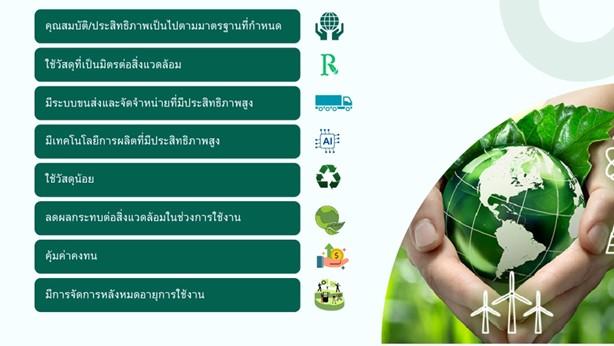
The Stock Exchange of Thailand has stipulated environmentally friendly procurement guidelines as part of the company's environmental policy. By 2025, the company aims to procure from certified suppliers. Green Label more than 30% of the total purchase value, with the performance showing the volume of environmentally friendly procurement in 2025. amounting to 602 million baht, representing 38 percent % which in line with the set targets, by The qualifications for suppliers in procuring environmentally friendly materials are as follows:
Social Policy & Guidelines
Has a Social Policy
Yes
Policy Description
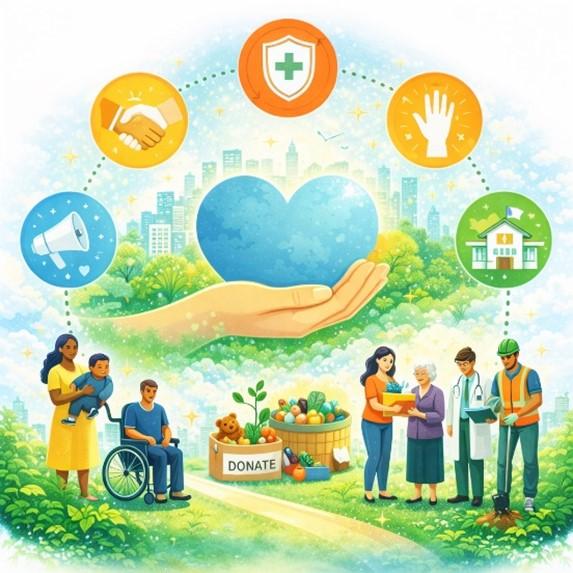 The company conducts its business by adhering to and prioritizing its duties and responsibilities towards society and stakeholders, including shareholders, customers, partners, employees, communities, and the broader society. This is to foster a commitment to business operations and to strive to operate as a good role model for society, guided by ethical principles and good corporate governance, to create benefits for society, the environment, and sustainable development. To achieve these goals, the company has established a corporate governance policy and business ethics, and has laid out a framework for its social responsibility policy and operational guidelines as follows:
• Good Corporate Governance
• Fair Business Practices
• Anti-Corruption
• Respect for Human Rights and Fair Treatment of Labor
• Consumer Responsibility
• Environmental Stewardship
• Community and Social Development Participation
• Preparation of Social and Environmental Reports
Support Sustainable Development Goals (SDGs)
Social Goals for 2025
The company recognizes the importance of human resource development, employs legal labor, and treats employees fairly, which are factors that will help increase the value of the business and enhance the company's competitiveness and sustainable growth in the future. Therefore, the company has established a policy for caring for rights and good treatment of personnel as a priority to promote a better quality of working life, create work motivation, and elevate the work experience of personnel. It provides training and development for employees to enhance knowledge and expertise, as well as pays attention to welfare, fostering a work environment that considers health, safety, and occupational hygiene within the workplace. By 2025, the company has arranged for regular reviews of safety management to maintain the ISO 45001 safety management system standard, ensuring safety for workers, in order to jointly create a society with environmental development and sustainable value creation.
Social Management Guidelines
-
Create a good environment, prioritize workplace safety, and develop work processes, upgrading technology and modern equipment for use in operations.
-
Care for and treat employees and stakeholders fairly, including establishing appropriate and transparent compensation.
-
Continuously develop personnel within the organization by providing training courses to enhance potential and capabilities, thereby increasing knowledge and expertise.
-
Occupational hygiene in the workplace, elevating the standards for managing occupational health and safety (ISO 45001) to achieve the goal of zero injuries and illnesses.
-
Promote and drive the creation of shared value with communities, including participation in assisting communities during difficult situations.
-
Protect the safety of employees, workers, partners, and company assets without affecting the rights and safety of others, as well as safeguard personal rights, confidential data storage, data disclosure, and the utilization of personal data.
-
Accept complaints and have procedures and processes to protect whistleblowers.
-
Respect rights and differences, showing honor with equality and consideration for human dignity.
-
Create or promote equal access to education or vocational training at all levels for vulnerable groups, including persons with disabilities.
Policy Document Link
https://www.well-graded.com/csr_policy
Social Guidelines
| Guideline | Other — Please Specify |
|---|---|
| Employee Rights | |
| Migrant Workers | |
| Child Labor | |
| Consumer Rights | |
| Community and Environment Rights | |
| Safety and Occupational Health at Work | |
| Non-discrimination | |
| Business Partner Rights | |
| Other | Personal Data Rights |
Employees — Plan & Guidelines
Has an Employee Management Plan
Yes
Plan Description
3.4.2.1 Treatment of Employees
Fair employee compensation
The company has a policy to provide fair compensation to employees, including career stability and opportunities for advancement. All employees have the opportunity to fully demonstrate their abilities and receive appropriate compensation, which will be evaluated based on criteria and procedures under relevant regulations. Performance evaluations are conducted twice a year, mid-year and year-end, to ensure employees consistently develop their work performance and to serve as a basis for compensation consideration. The company reviews and adjusts employee compensation to align with the company's short-term and long-term performance. Details of employee compensation are presented in "Section 7.5 Employee Information" in this One Report.
Furthermore, the company considers the well-being of its employees by providing welfare benefits and other compensation to executives and employees appropriate to the economic conditions, to foster organizational commitment. These include:
Provident Fund
The company has established the K Master Pool Fund provident fund, which is registered and managed by Kasikorn Asset Management Co., Ltd., a fund management company under the Provident Fund Act B.E. 2530 (including amendments), effective March 1, 2020. Employees participating in the provident fund contribute 3.00% of their monthly salary to the fund, while the company contributes 3.00% of the employee's monthly salary to the provident fund, to provide employees with a lump sum for retirement expenses and financial security for their families.
Details of contributions paid between 2022-2024.
| Item | 2023 | 2024 | 2025 |
| Accumulated contributions (Unit: Baht) | 1,742,830 | 2,112,776 | 2,422,686 |
| Company contributions (Unit: Baht) | 1,742,830 | 2,112,776 | 2,422,686 |
| Total employees (Unit: persons) | 221 | 263 | 288 |
Note : Data includes 5 executives
Details of employees participating in the provident fund.
| Item | 2023 | 2024 | 2025 |
| Total number of employees Who are provident fund members (Unit: persons) | 1,742,830 | 2,112,776 | 2,422,686 |
| Percentage of employees who are provident fund members relative to total employees. | 1,742,830 | 2,112,776 | 2,422,686 |
Note : 1. Fund participation is subject to the conditions of the fund manager and the company's conditions.
2. Total employee provident fund contributions (excluding executives)
Employee insurance / Group health insurance benefits
To prevent impacts on business operations in the event of accidents involving employees, the company has arranged group insurance benefits for employees, with various compensation amounts allocated to employees based on their level and position, as detailed in the policy.
New employee physical examinations and annual health check-ups
The company's employees are considered valuable assets. Therefore, employee health, whether general physical well-being, affects the company's operations. If employees are healthy, do not fall ill, or can receive immediate treatment if they start to fall ill, it will significantly help employees save on medical expenses.
Various financial assistance welfare benefits
The company provides various welfare benefits to employees beyond what is legally required, such as financial assistance for funeral expenses of deceased parents or spouses of employees. The operations in 2025 were as follows:
| Welfare items | Year 2023 | Year 2024 | Year 2025 | |||
| Number | Amount | Number | Amount | Number | Amount | |
| Visiting the sick | 2 | 1,729 | 2 | 1,729 | 10 | 12,479 |
| Childbirth | 7 | 14,000 | 7 | 14,000 | 4 | 8,000 |
| Graduation |
| 11,000 |
| 11,000 | 7 | 12,000 |
| Funeral | 4 | 30,000 | 4 | 30,000 | 4 | 30,000 |
| Marriage | - | - | - | - | 2 | 4,000 |
| Housing allowance | 14 | 73,933 | 14 | 73,933 | 2 | 15,800 |
3.4.2.2 Treatment of Customers
The company consistently manages customer relationships through satisfaction surveys and provides channels for customers to submit comments, suggestions, and complaints to the company, which is one approach to fostering good long-term customer relationships. If any complaints are found, the company will promptly investigate the facts to use as a guideline for improvement and correction. In 2025, the company did not receive any complaints from customers regarding unfair practices.
3.4.2.3 Treatment of Business Partners
The company has a policy for selecting partners to treat them fairly, under the criteria for evaluating and selecting the company's partners to prevent corruption and misconduct at all stages of the procurement process, in order to foster good business relationships that benefit all parties.
Supplier selection and relationships
The company will consider the selection of business partners based on
-
Possess certification standards received by partners from credible organizations.
-
Communication/Quotation within the specified timeframe.
-
Product quotation and fair price comparison
-
Receiving fair contract terms for business partners.
-
Setting conditions for partners that prioritize employee safety and occupational health.
Guidelines for promoting the potential and capabilities of business partners
The company prioritizes developing and enhancing the potential of partners in the supply chain to strengthen shared operational standards and support the sustainable growth of the construction and real estate sectors. In 2025, the company established strategic collaborations with leading business partners. On March 24, 2025, the company signed a Memorandum of Understanding (MOU) with Siam City Cement Public Company Limited, and subsequently, on April 3, 2025, the company signed an MOU with Jorakay Corporation Company Limited. The objective is to elevate construction standards for leading real estate projects, while promoting the selection of environmentally friendly construction products and innovative materials, which aligns with the company's approach to socially and environmentally responsible business operations, as well as developing an efficient, transparent, and sustainable supply chain in the long term.
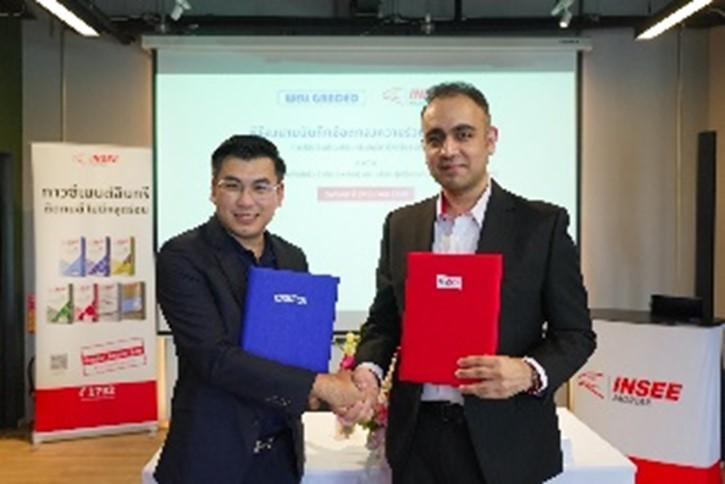
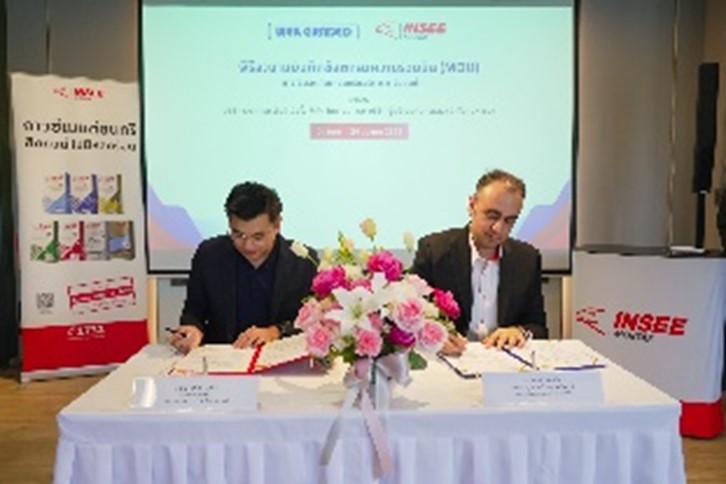
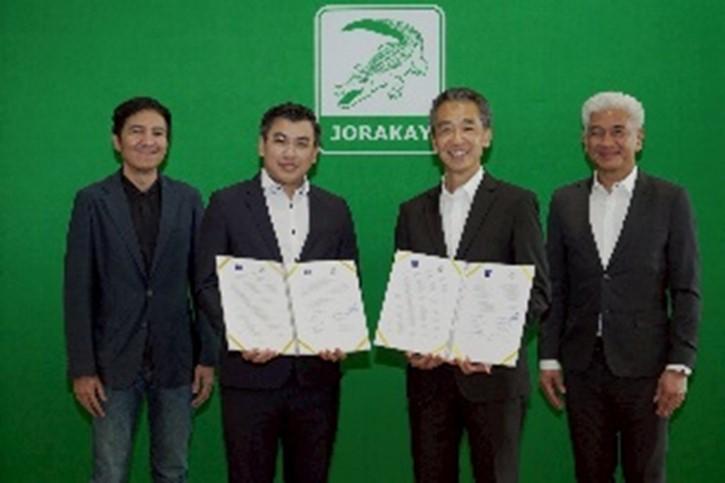
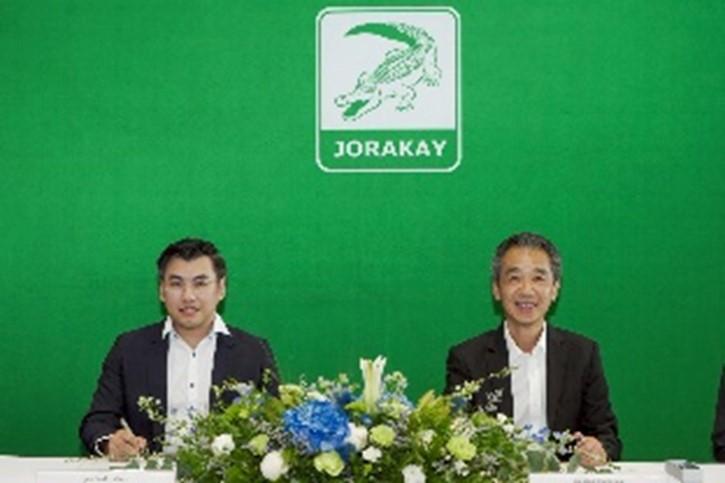
The company supports its business partners by implementing the PayZave platform, which connects the company and its partners, enabling immediate payments without credit terms. In 2025, the company had 227 partners participating in the project, an increase of 7 partners from 2024, totaling 38.46 million Baht.
3.4.2.4 Treatment of Trade Competitors
The company is committed to free and fair trade and business competition, operating within a framework of good competitive rules and ethics with all parties, through transparent and verifiable processes, free from corruption. It does not seek confidential information from competitors through inappropriate means, such as damaging the reputation of competitors through false accusations. In 2025, there were no lawsuits between the company and its trade competitors.
3.4.2.5 Treatment of Financial Creditors
The company has a policy to strictly adhere to the terms and conditions of various contracts and financial obligations, including the repayment of principal, interest, and the management of various collaterals under related contracts. Furthermore, it does not use dishonest methods to conceal information or facts that could cause damage to creditors. In the event of inability to comply with any condition, creditors must be promptly notified in advance to jointly consider solutions.
Employee potential development
In line with its human resource development policy, the company has established employee competency development programs to create growth and advancement opportunities for employees, and to encourage employees to participate in training with a target of no less than 6 hours per person per year, in accordance with legal requirements. The company provides knowledge enhancement and training through various formats, including seminars, online learning, and practical learning, to help employees develop their knowledge, skills, work attitudes, ethics, and teamwork. Furthermore, the company aims to develop personnel to create and prepare for executive succession or promotion, focusing on internal development, which is a crucial factor for stable growth.
Plan Areas
| Plan Area |
|---|
| Fair employee compensation |
| Employee training and development |
| Promoting employee relations and participation |
| Migrant/foreign labor |
| Occupational health and safety in workplace |
Employees — Workforce
Employees with Disabilities — Introduction
 The Department of Employment has established operational procedures for the implementation of Section 35 of the Persons with Disabilities Empowerment and Quality of Life Development Act B.E. 2550 (2007). Employers or business owners may grant concessions, provide sales or service outlets, outsource work, provide internships, or offer any other assistance to persons with disabilities or their caregivers. This shall be in accordance with the criteria and methods prescribed by the Committee in the regulations, in order to facilitate persons with disabilities and their caregivers in exercising their rights under Section 35.
In line with government policy and to promote employment, the Company provides assistance to persons with disabilities to secure employment, totaling 9 positions in 2025. They have been employed in various projects, namely: Integrated Farming Project, Mala Restaurant Project (La Lin Lan), Boiled Beef Hide, Beef Leg, and Oxtail Sales Project, Crop Rotation and Economic Crop Cultivation Project, A La Carte Food Sales Project, Grass Broom Production Project, Doormat Production Project, Dishwashing Liquid Production Project, and Integrated Agriculture Project.
Workforce Data
| Metric | Current Year | Previous Year | Two Years Ago |
|---|---|---|---|
| Total number of employees (Persons) | 278 | 263 | 221 |
| Number of male employees (Persons) | 169 | 169 | 136 |
| Number of female employees (Persons) | 109 | 94 | 85 |
| Total employment of disabled persons (people) | 9 | 7 | 7 |
| Total disabled employees (people) | 0 | 0 | 0 |
| Total male disabled employees (people) | 0 | 0 | 0 |
| Total female disabled employees (people) | 0 | 0 | 0 |
| Total disabled workers who are non-employee (people) | 9 | 7 | 7 |
| Contributions to the fund for promoting and improving the quality of life for disabled persons | 0 | 0 | 0 |
| Total number of male employees in operational level (Persons) | 130 | 132 | 97 |
| Total number of male employees in management level (Persons) | 36 | 34 | 36 |
| Total number of male employees in executive level (Persons) | 3 | 3 | 3 |
| Total number of female employees in operational level (Persons) | 97 | 82 | 72 |
| Total number of female employees in management level (Persons) | 10 | 10 | 11 |
| Total number of female employees in executive level (Persons) | 2 | 2 | 2 |
Employees — Remuneration & Provident Fund
Remuneration & Provident Fund
| Metric | Current Year | Previous Year | Two Years Ago |
|---|---|---|---|
| Total disabled employees (people) | 107,670,489 | 94,245,485 | 90,403,081 |
| Total male employee remuneration (Baht) | 72,762,164 | 63,381,280 | 62,462,121 |
| Total female employee remuneration (Baht) | 34,908,325 | 30,864,205 | 27,940,960 |
| Number of employees eligible to participate in PVD (persons) | 278 | 263 | 221 |
| Total number of employees joining employee provident fund (Persons) | 193 | 155 | 157 |
| Percentage of total number of employees joining employee provident fund to total number of employees (%) | 69.42 | 58.94 | 71.04 |
| Number of PVD members / Total eligible employees (%) | 69.42 | 58.94 | 71.04 |
| Total amount of provident fund contributed by the Company (Baht) | 2,422,686 | 2,112,776 | 1,742,830 |
| Total amount of provident fund contributed by employee (baht) | 2,422,686 | 2,112,776 | 1,742,830 |
Employees — Training & Development
Training Data
| Metric | Current Year | Previous Year | Two Years Ago |
|---|---|---|---|
| Average employee training hours (Hours / Person / Year) | 9 | 9 | 6 |
| Employee development and training expenses (baht) | 515,952 | 628,646 | 538,196 |
Employees — Occupational Health & Safety
Introduction
Safety and Occupational Health Policy
 The Company is committed to conducting business with a focus on quality, occupational safety and health, and operations at international standards. To demonstrate this commitment, senior management has clearly defined and announced policies to be implemented in construction management, inspection, verification, as well as the continuous improvement and development of an effective occupational health and safety management system. The policies to be adhered to are: “Quality work, safety, on time, developing towards sustainability” which must be extended to all employees at all levels for consistent and appropriate implementation.
The Company has been certified with the Occupational Health and Safety Management System standard (ISO 45001), which is applied in construction work alongside promoting training, organizing knowledge-sharing activities, and fostering continuous employee participation in safety, occupational health, and a good working environment. This ensures the safety of both lives and property during operations.
Employee Safety and Occupational Health Plan
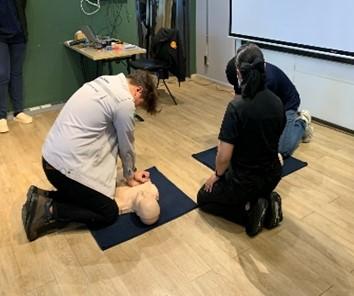
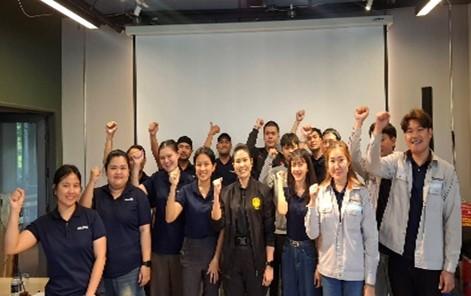
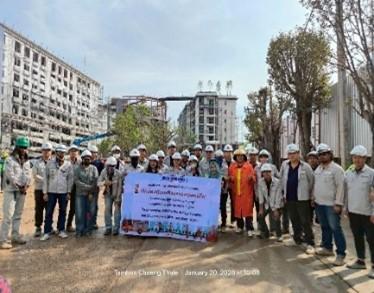
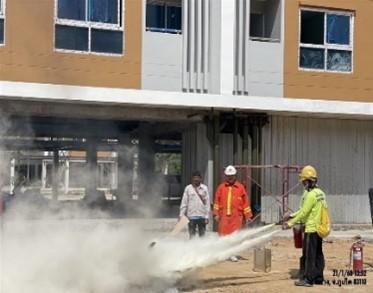
Occupational Health and Safety and Working Environment (OHS) are related to the safety and health of employees within the company. To prevent employees from harm, accidents, or work-related impacts, training/drills are organized to prepare for potential emergencies, such as first aid, fire drills, and evacuation drills for employees at all levels. To ensure that the working environment complies with legal requirements, the company conducts workplace environment inspections, including lighting and noise levels, to maintain an appropriate working environment.
-
First Aid
First aid is a crucial skill that enables us to respond promptly to unexpected situations, requiring specialized knowledge or appropriate decision-making for each emergency. Assistance may involve using only readily available equipment to stabilize the patient's condition until medical personnel provide treatment or the patient is urgently transferred to a hospital.

-
Fire Drills and Evacuation Drills
To ensure that operational employees are aware of the procedures to follow in the event of a fire, learn alarm signals indicating various incidents, and understand how to survive a fire to minimize losses, enabling employees to apply their knowledge and skills to safely evacuate from a fire incident.
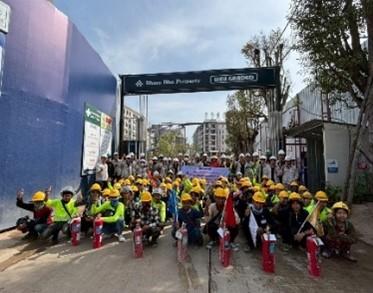
Summary of operational performance against targets for the year 2025
Operations and the management of safety, occupational health, and the working environment involve analyzing injury rates. Work-related accidents are categorized into three types: accidents from working at heights, accidents from working in confined spaces, and accidents from work involving sparks and heat. For the overall year 2025, the Company has not found any accidents from these three categories that resulted in work stoppage, thus achieving 100% success according to the safety plan.
Occupational Health & Safety Data
| Metric | Current Year | Previous Year | Two Years Ago |
|---|---|---|---|
| Total number of lost time injury incidents by employees (Cases) | 0 | 0 | 0 |
Employees — Labour Relations
Labour Relations — Introduction
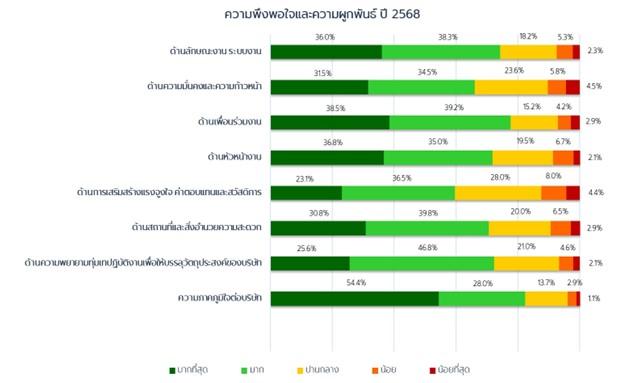
Employee Satisfaction/Engagement Survey Results
The company places importance on continuously monitoring and evaluating employee satisfaction and engagement levels, as employee engagement can change based on context and work experience over time. In 2025, the company conducted an online survey on employee satisfaction and engagement, with 57% of all employees participating in the questionnaire.
The survey results indicate that the overall employee satisfaction and engagement level was 79.43%, which is considered good. This reflects that most employees have a positive attitude towards the organization, are ready to perform their duties, and actively contribute to supporting the company's operations to achieve its defined goals. The company has analyzed these survey results to establish appropriate guidelines and measures for human resource development, to strengthen employee engagement and enhance the organization's operational efficiency sustainably in the long term.
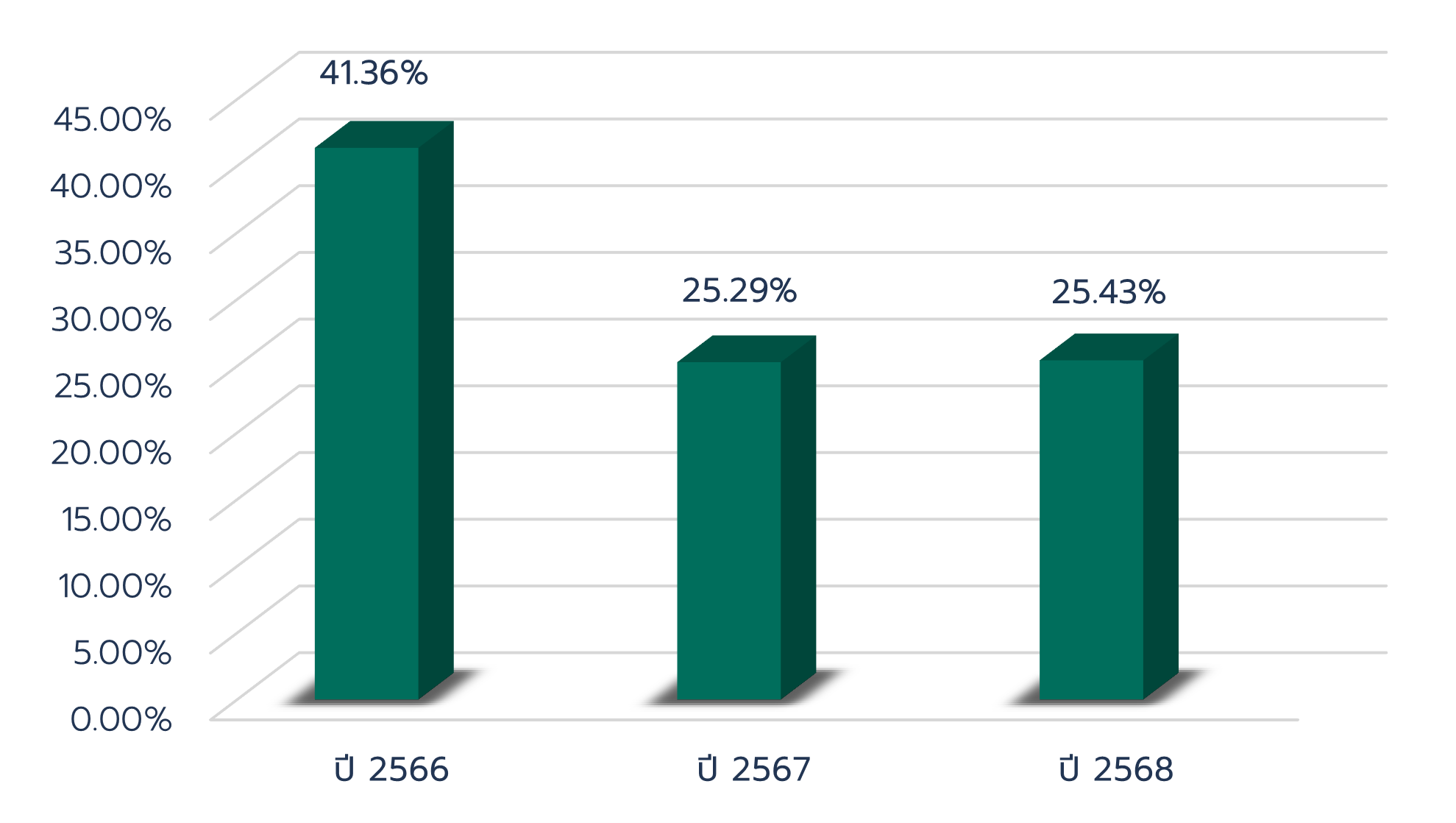
Employee turnover rate
Labour Relations Data
| Metric | Current Year | Previous Year | Two Years Ago |
|---|---|---|---|
| Total voluntary resignations (Persons) | 61 | 50 | 92 |
| Male employees who voluntary resigned (Persons) | 44 | 27 | 57 |
| Female employees who voluntary resigned (Persons) | 17 | 23 | 35 |
| Percentage of employee turnover leaving the Company voluntarily (%) | 21.94 | 19.01 | 41.63 |
| Evaluation result of employee engagement | 1 | 1 | 1 |
Employees — Employee Representation
Introduction
Establishment of the Welfare Committee
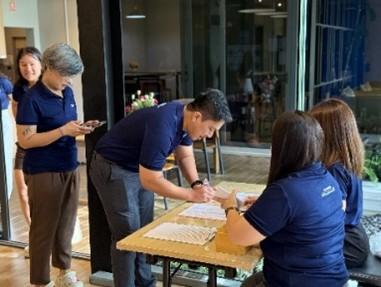
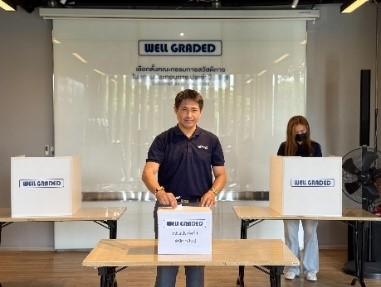
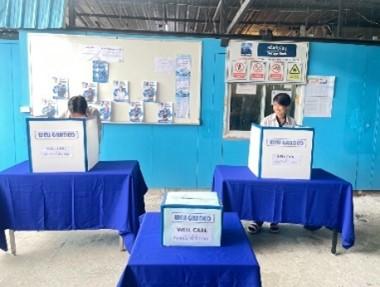
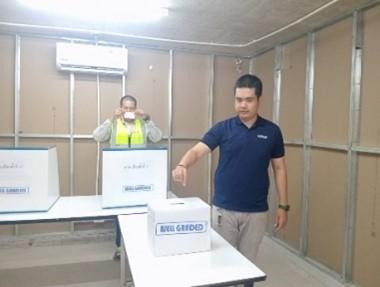
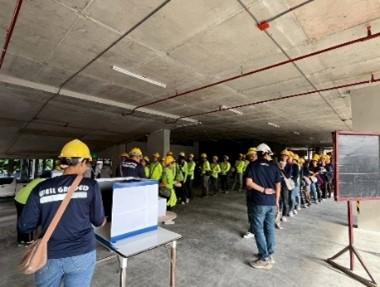
The Company organized an election for 5 welfare committee members within the establishment on June 24, 2025, to serve as representatives for consultation, oversight, and offering opinions on various welfare matters, thereby reducing conflicts that could lead to labor disputes. This was achieved by applying the principles of labor relations to conduct bipartite activities, providing opportunities for employees to present their opinions to the employer.
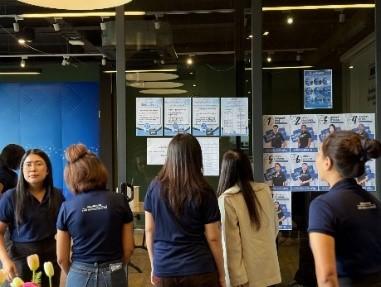
Employees Are Represented Collectively
Yes
Forms of Representation
| Form |
|---|
| Welfare committee |
Employees — Targets
Has Set Employee Targets
Yes
Targets
| Indicator | Target Areas | Base Year | Target Year | Target Year — Description |
|---|---|---|---|---|
| Manage employee training to ensure that at least 50% of all employees acquire knowledge and skills. | 2984 · Description: Employee training and development | 2,025 | 2,025 | 85% of employees received training in 2025. |
Employees — Performance & Outcomes
Has Performance Results
Yes
Performance Description
Annual Training 2568
| Sequence | Training Course | Number of Employees Trained | Number of Training Course Hours |
| 1 | Chat GPT for HR | 1 | 2 |
| 2 | Director Accreditation Program (DAP) | 1 | 12 |
| 3 | Director Certification Program | 1 | 36 |
| 4 | DPO in Action Series 26 | 1 | 18 |
| 5 | Economic Update for CFO: Monitoring Domestic and International Economic Situations | 1 | 3 |
| 6 | Generative AI for Ownners | 1 | 6 |
| 7 | REVIT ESSENTIAL TRAINING PROPOSAL | 5 | 120 |
| 8 | Three lines of defense model and the CFO's operations | 1 | 3 |
| 9 | V.A.I.P for SMEs | 1 | 21 |
| 10 | V.A.I.P. Series 6 | 1 | 24 |
| 11 | V.A.I.P. Series 7 | 2 | 48 |
| 12 | New Labor Protection Law (Edition 9) B.E. 2568 | 3 | 9 |
| 13 | Business Labor Law for Entrepreneurs | 3 | 18 |
| 14 | Safety Laws for Efficient Operations, Specific to Safety Officer Positions | 10 | 30 |
| 15 | Laws Related to Technology Crime and the Cybersecurity Royal Decree (New Edition) | 1 | 3 |
| 16 | Defining and Implementing Strategy to Design Tactics and Work Standards | 7 | 11 |
| 17 | Creative Problem Solving for Process Improvement | 38 | 76 |
| 18 | Creative Strategic Problem Solving | 38 | 76 |
| 19 | Risk Management and Administration | 42 | 84 |
| 20 | Preparation of Meeting Invitation Letters | 2 | 6 |
| 21 | Board Meeting Arrangement | 1 | 2 |
| 22 | Negotiation and Persuasion | 7 | 42 |
| 23 | Hazard Identification and Risk Assessment according to Standard ISO 45001:2018 | 46 | 138 |
| 24 | Risk Assessment (Risk Assessment) ISO 9001 2015 | 12 | 36 |
| 25 | Empowering Accountants with AI | 2 | 24 |
| 26 | Problem Analysis and Preventive Solutions NC - CAR | 24 | 72 |
| 27 | Strategic Communication for Positive Impact | 37 | 74 |
| 28 | Training or Refresher on Crane Operations | 3 | 9 |
| 29 | Requirements ISO 9001:2015 and its Application | 16 | 48 |
| 30 | Requirements and Application of Occupational Health and Safety System ISO 45001:2018 | 21 | 63 |
| 31 | Safety, Occupational Health, and Working Environment Committee (SHE Committee) | 33 | 396 |
| 32 | Gas Control Worker for Gas-Using or Gas-Storage Plants | 2 | 36 |
| 33 | Electrical Work Safety and Assistance for Employees Affected by Electrical Hazards | 22 | 66 |
| 34 | Safety in Confined Space Work | 11 | 264 |
| 35 | Project ESG Risk Workshop 2025 - Fraud Risk Management | 2 | 28 |
| 36 | Workshop Project for Construction Work, Annual 2568 | 2 | 24 |
| 37 | Workshop Project to Drive Proactive Workplace Safety | 1 | 14 |
| 38 | Safety Officer at Management Level | 1 | 12 |
| 39 | Safety Officer at Supervisor Level | 3 | 36 |
| 40 | Advanced Technical Safety Officer | 1 | 180 |
| 41 | Fire Evacuation Drill | 43 | 43 |
| 42 | Lessons Learned from Preparation e-onee Report to Annuall Report | 3 | 9 |
| 43 | Professional Ethics Governance and Work Philosophy of Wellgrade | 41 | 82 |
| 44 | Best Practices for Determining Director Remuneration | 2 | 6 |
| 45 | Role and Responsibilities of the Company Secretary in Preventing the Use of Personal Information in Stock Trading | 2 | 6 |
| 46 | Role of New Employee Orientation | 4 | 12 |
| 47 | Construction Insurance CAR: In-depth Coverage and Claims from an Insurance Company's Perspective | 28 | 112 |
| 48 | Dispute Issues in Construction Contracts, Series 4 | 1 | 16 |
| 49 | Changing Standards and Recommended Practices | 21 | 74 |
| 50 | Basic Hydraulic Systems for Cranes and Heavy Machinery, Series 10 | 1 | 6 |
| 51 | Online Seminar ESG with Opportunities and Risks | 4 | 8 |
| 52 | Principles of Communication and Coordination | 36 | 72 |
| 53 | Mentoring, Coaching, and Knowledge Transfer Course for Subordinates | 7 | 14 |
| 54 | Course on Principles of Delegation and Work Monitoring, Delegating Tasks | 7 | 14 |
| 55 | Training on Preparation of Meeting Invitation Letters | 2 | 6 |
| 56 | Basic Firefighting Training and Fire Evacuation Drill | 20 | 120 |
| 57 | Firefighting and Fire Evacuation Drill Training | 41 | 246 |
| Grand Total | 670 | 3,015 | |
Customers — Plan & Guidelines
Has a Customer Management Plan
Yes
Plan Description
Strengthening relationships and developing customer satisfaction.
The Company is committed to meeting customer needs through construction management that pays attention to every detail of each step, from design, controlling work to conform to construction drawings and operational plans, verifying calculations for accuracy according to professional standards, to selecting construction materials that are of high quality and comply with specified standards.
Furthermore, the Company emphasizes quality project management, operating under the ISO 9001:2015 standard system, which covers work control during construction and inspection before project handover, to build confidence and satisfaction for customers, ensuring that the delivered work truly meets quality standards and customer requirements.
The Company is committed to continuous customer relationship management through a customer satisfaction survey process. Evaluation forms are sent to all relevant departments, including project owners and/or their representatives, to inquire, monitor, and evaluate operational performance, as well as to collect data and identify deficiencies for improvement and further development of work methods, with the goal of achieving maximum customer satisfaction.
In the past year, 2025, the Company received a very satisfied level of customer satisfaction, accounting for 83%, which met the Company's target of over 80%.
Responsibility towards customers and communication of service information.
The Company provides after-sales service. It will attend meetings with customers to clarify warranty conditions, which cover a warranty period of no less than 1 year or as mutually agreed. Currently, the Company has 11 projects under the care of the after-sales service team, focusing on professionally rectifying defects.
The Company has an after-sales service team comprising specialized personnel with the skills and experience to resolve issues quickly and efficiently. Furthermore, the Company has integrated repair experience with the project department to develop knowledge for continuously improving work methods and increasing efficiency in construction work, thereby building confidence in the quality of the Company's construction work.
The Company is committed to continuous customer relationship management through a customer satisfaction survey process. Evaluation forms are sent to all relevant departments, including project owners and/or their representatives, to inquire, monitor, and evaluate operational performance, as well as to collect data and identify deficiencies for improvement and further development of work methods, with the goal of achieving maximum customer satisfaction.
Plan Areas
| Plan Area |
|---|
| Responsible production and services for customers |
| Communication of product and service impacts to customers/consumers |
| Development of customer satisfaction and customer relationship |
Customers — Satisfaction Results
Customer Satisfaction Results
| Metric | Current Year | Previous Year | Two Years Ago |
|---|---|---|---|
| Evaluation results of customer satisfaction | 1 | 1 | 1 |
Customers — Targets
Has Set Customer Targets
Yes
Targets
| Indicator | Target Areas | Base Year | Base Year — Description | Target Year | Target Year — Description |
|---|---|---|---|---|---|
| Customer Relationship Management | 3007 · Description: Responsible production and services for customers | 2,025 | More than 80% | 2,025 | Customer satisfaction was at a highly satisfied level, representing 83%. |
| Timely rectification of defects | 3008 · Description: Communication of product and service impacts to customers/consumers | 2,025 | The target set at 80% | 2,025 | Able to implement defect rectification in accordance with the operational plan, achieving customer satisfaction in after-sales service of up to 99.94%. |
| Service Satisfaction | 3009 · Description: Development of customer satisfaction and customer relationship | 2,025 | The target set at 80% | 2,025 | The company is able to rectify defects in accordance with the operational plan and achieve customer satisfaction in after-sales service of 97.76%. |
Customers — Performance & Outcomes
Has Performance Results
Yes
Performance Description
Customer Relationship Management
In the past year 2025, the Company achieved a very high level of customer satisfaction, accounting for 83%, which is in line with the Company's target of over 80%.
Key Performance Indicators
-
Customer satisfaction with work quality control accounted for 82%
-
Customer satisfaction with operational lead time accounted for 81%
-
Customer satisfaction with project management accounted for 79%
-
Customer satisfaction with safety and hygiene management accounted for 85%
-
Customer satisfaction with coordination accounted for 85%
-
Customer satisfaction with personnel accounted for 85%
-
Customer satisfaction with services accounted for 81%
Responsibility towards Customers
In 2025, the Company was able to rectify defects according to the operational plan and generate customer satisfaction with after-sales service.
Key Performance Indicators
-
Rectification of defects within the specified timeframe accounted for 99.94%
-
Satisfaction with service delivery accounted for 97.76%
The results of rectifying defects according to the operational plan and generating customer satisfaction with after-sales service reached 98.57%, which is higher than the set target of 80%, demonstrating the Company's commitment to providing quality after-sales service.
Community & Social — Plan & Guidelines
Has a Community & Social Plan
Yes
Plan Description
Corporate Social and Environmental Responsibility. The company recognizes its responsibility towards the community and society.
Therefore, the company has a policy to conduct business that benefits the economy and society, and is committed to acting as a good corporate citizen, fully complying with all relevant laws and regulations. The company is dedicated to developing, promoting, and enhancing the quality of life in the society and communities where it is located, ensuring improvement alongside the company's growth.
(1) The company consistently surveys and assesses the condition of the surrounding community and society where its business is located, to determine the extent to which they are affected by the company's operations, and is committed to contributing to their rectification and improvement, along with both direct and indirect community development. In its past operations, the company has measured air pollution levels and assessed noise impacts, as well as organized public relations activities.
(2) The company strengthens communities by supporting community and social activities, the development of small businesses and local products, as well as improving education and the quality of life in the community.
Plan Areas
| Plan Area |
|---|
| Occupational health, safety, health, and quality of life |
Community & Social — Targets
Has Set Community & Social Targets
No
Community & Social — Performance & Outcomes
Has Performance Results
Yes
Performance Description
Surveying and assisting communities surrounding the project.
The Company recognizes the importance of caring for communities, society, and the environment in the areas surrounding its construction projects, paying attention before, during, and after construction. As the communities and societies where the Company undertakes projects are business districts, commercial areas, and tourist attractions, which are important business hubs, the Company conducts surveys to assess potential damages or impacts and fosters good relationships with surrounding communities. This reflects its commitment to operating business with good corporate governance principles and sustainable development. In the past year, the company has considered its participation in community and social development.
The company has established a code of conduct regarding social and environmental responsibility to be strictly adhered to. This code is disclosed in the Good Corporate Governance Handbook available on the website and disseminated internally through the Intranet system for employees to acknowledge and follow.
Participation in surveying and assisting communities surrounding the project.
The company prioritizes coexisting with communities, society, and the environment surrounding its construction project areas. It focuses on operations that consider the impact on communities both during and after construction, aiming to foster mutual understanding and promote sustainable relationships between the organization and the surrounding communities. In its operations, the company has conducted on-site surveys of community living conditions, listened to opinions, complaints, and suggestions from the public, to analyze this information and adjust work processes appropriately, thereby reducing potential impacts from project implementation.
Furthermore, the company has implemented measures to control environmental and safety impacts, such as controlling dust, noise, traffic, and maintaining orderliness in the area. These operational guidelines are continuously communicated to employees and contractors through internal channels, such as the Intranet system, to ensure consistent awareness and compliance.
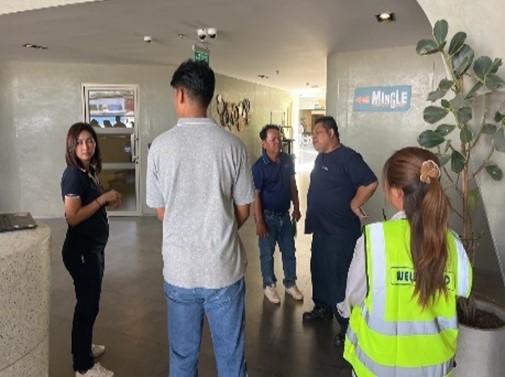
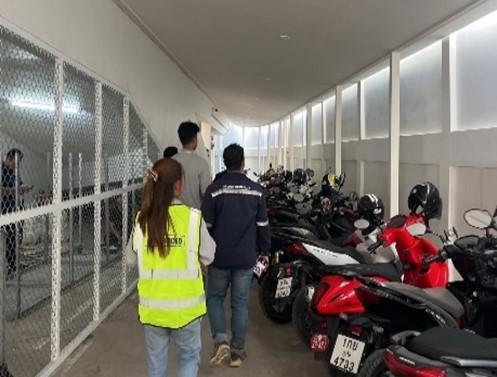
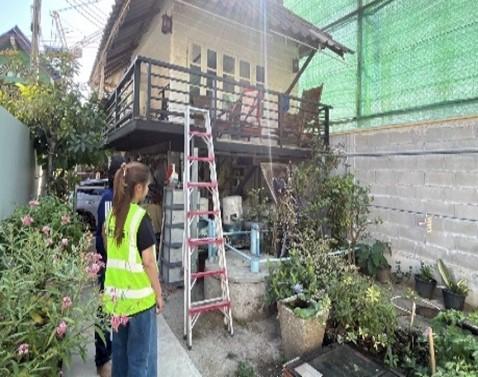
Law Violation Incidents
Law Violation Incidents
| Metric | Current Year | Previous Year | Two Years Ago |
|---|---|---|---|
| The total number of cases or incidents of significant violations of laws or regulations regarding social and human rights (Cases) | 7 | 4 | 3 |
| The total number of cases or incidents that cause significant labor disputes (Cases) | 0 | 0 | 0 |
| The total number of cases or complaints related to consumer rights violations (Cases) | 0 | 0 | 0 |
| The total number of cases or complaints related to partner rights violations (Cases) | 0 | 0 | 0 |
| The total number of cases or incidents that cause disputes with the community/society (Cases) | 7 | 4 | 3 |
| The total number of cases or incidents related to cyber security or customer data breaches (Cases) | 0 | 0 | 0 |
| The total number of cases or incidents related to safety and occupational health at work (Cases) | 0 | 0 | 0 |
Law Violations — Case Detail & Corrective Measures
Incidents & Corrective Measures
| Year | Incident Detail | Status | Remediation Measures | Non-financial Impact | Financial Impact Incurred (THB) | Financial Impact Expected (THB) |
|---|---|---|---|---|---|---|
| 2,024 | This dispute arose from complaints by neighboring residents regarding the impact of construction from the Office of Natural Resources and Environmental Policy and Planning building project, located on Rama VI Road, Phaya Thai Subdistrict, Phaya Thai District, Bangkok. The company has already provided assistance and compensation. However, differing perspectives on the impact led to a dispute and further negotiations. Currently, both parties have negotiated and reached a mutual agreement. | Incident no longer subject to action | The company has provided assistance and remedies. However, differing perspectives regarding the impact led to disputes and further negotiations. Currently, both parties have negotiated and reached a mutual agreement. | 0 | 0 | 0 |