WELL GRADED ENGINEERING PUBLIC COMPANY LIMITEDSET: WGE🇹🇭 TH

Risk Management · 2025

Risk Management Policy & Plan

Policy & Plan Description

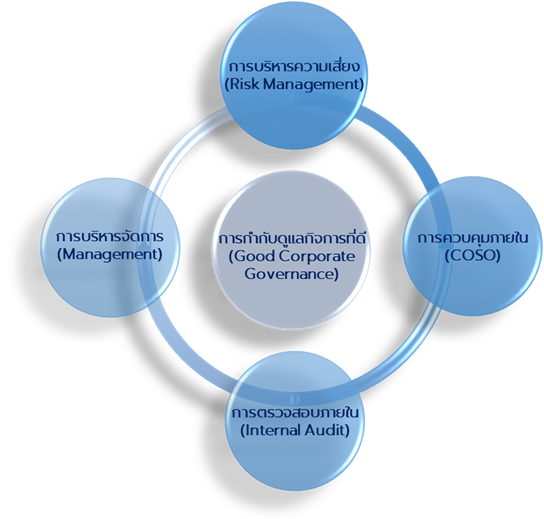
The company has risk management guidelines in accordance with international standards ( COSO Enterprise Risk Management Framework : COSO ERM Framework), which the company recognizes and appreciates the importance of good corporate governance to drive stable organizational growth and business expansion, maintain a strong financial position, and generate appropriate returns for shareholders, as well as operate according to the principles of Good Corporate Governance, with internal quality control systems and performance evaluation systems. Therefore, the Board of Directors deems it appropriate to implement risk management to ensure good corporate governance and enhance confidence among shareholders and stakeholders. To ensure that the overall organizational risk is at an acceptable level, the following risk management policy is established:

  1. Stipulate that risk management is the responsibility of employees at all levels and in all departments.
    who must be aware of the risks involved in their departmental and organizational operations, with an emphasis on managing various aspects of risk to ensure that risks are at an adequate and appropriate level.

  2. An enterprise risk management process is in place, adhering to international standards, to ensure efficient risk management, foster development, and align operations across the organization. This includes focusing on achieving defined objectives, goals, vision, mission, and strategies to create operational excellence and build confidence among stakeholders.

  3. Guidelines are established for managing operational risks of the company to avoid potential damage or losses, including regular monitoring and evaluation.

  4. Develop the use of information technology systems as a communication channel in the company's risk management process, enabling personnel at all levels to access information comprehensively, and efficiently manage the risk management reporting system for the organization's Risk Management Committee.
Risks to the Company's Business Operations

Introduction

The assessment of key risks in the company's business operations (Key Risk) involves analysis of both internal and external factors, as well as future trends that may impact the organization's short-term, medium-term, and long-term objectives. The occurrence of such risks is monitored and observed, and risk management plans are developed to address these issues and mitigate their impact on operational goals in 2024. The company has assessed significant risks in alignment with its corporate business plan and sustainable business development, encompassing environmental, social, and governance dimensions, as follows:
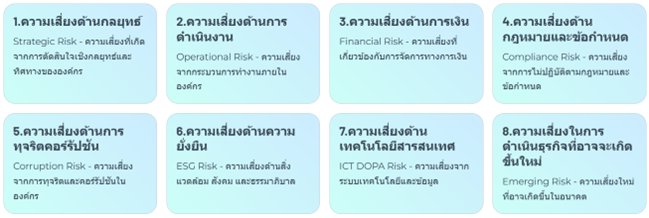
Risk Register

Risk NameRisk CharacteristicsConsequencesManagement MeasuresRelated Risk Factors
Strategic Aspect

Risks (S01) : Retaining existing customers

Customer demands for product quality and timely delivery, along with expectations for increased use of environmentally friendly materials, may impact the retention of existing customers. Therefore, the company has measures in place to use environmentally friendly products, with a target for 2025. Procurement is conducted with Green Label certified suppliers, with the value of environmentally friendly procurement in 2025. Amounting to 577 million Baht Representing 32 percent % which increased from the previous year. to 12% The procured materials are divided into office supplies, including environmentally friendly paper, and construction materials such as concrete, steel, lightweight bricks, tile adhesive-grout, building paint, electrical transformers, sanitary ware, precast walls, tiles, and others, with specified supplier qualifications for providing environmentally friendly materials. which is at a risk level that the company can still manage.

Risk Details

Risk Management

  • Customer demand for product quality

  • Timely delivery of projects to customers.

  • Use of environmentally friendly materials

  • Continuously build good relationships with customers (CRM)

  • Build customer confidence by delivering projects on time and with quality.

  • There is a process to survey operations that do not impact the environment and neighboring communities through customer satisfaction assessments.

Opportunities (S02) : Target new potential customer groups.

The company aims to accommodate more potential new customer groups. Maximizing cost and project management efficiency, and focusing on high-potential niche markets with fewer competitors, will be key to driving exponential profit growth.

Details of Opportunities

Risk Management

  • Accommodating new potential customer groups.

  • Focus on high-potential niche markets with fewer competitors.

  • Target potential customers in the economic zone in the South, such as Phuket.

  • Create a positive organizational image to build customer confidence.

  • Manage projects to be safe and friendly to surrounding communities.

  • Continuously build good relationships with customers (CRM)

  • Build brand awareness and organizational reputation, such as promoting communication through websites, Facebook pages, making project signs, and participating in CSR activities, etc.

Opportunities (S03) : Increase the proportion of projects undertaken in economically potential areas where the company has a competitive advantage.

The company aims to increase the proportion of projects undertaken in economic areas and must build confidence and trust among customers in these economic areas, demonstrating the company's potential and creating a positive image.

Details of Opportunities

Opportunity Management

  • Increase the proportion of projects undertaken in economic areas.

  • Build confidence and trust with customers.

  • Target potential customers in the economic zone in the South, such as Phuket.

  • Create a positive organizational image to build customer confidence.

  • Manage projects to be safe and friendly to surrounding communities.

  • Continuously build good relationships with customers (CRM)

  • Build brand awareness and organizational reputation, such as promoting communication through websites, Facebook pages, making project signs, and participating in CSR activities, etc.

Risk Details

Opportunity Management

  • Labor and resource costs.

  • Competitors in the area

  • Analyze detailed economic data of the area, such as economic growth rates and infrastructure.

  • Consider the company's strengths compared to competitors in those areas.

  • Closely monitor expenses, compare them with the allocated budget, and take corrective actions when discrepancies occur.

Risks (S04) : Reduce carbon emissions and promote a circular economy.

The organization has a strong internal management system, aligned with external drivers, and strictly adheres to good governance principles. Balancing economic returns with social and environmental responsibility will be key to creating true long-term value.

Risk Details

Risk Management

  • Social and environmental responsibility.

  • Continuously implement ESG initiatives

  • Control and record water and electricity consumption.

  • Reuse waste materials and create benefits, such as using concrete scraps to fill areas in construction projects, using scrap metal to make equipment pouches, making sink legs for use in accommodation camps, and using them to make support protection arms.

  • Use environmentally friendly products, use Precast Concrete Walls.

Risks (S05) : Promote the safety and quality of life of workers.

The organization has a strong internal management system, aligned with external drivers, and strictly adheres to good governance principles. Balancing economic returns with social and environmental responsibility will be key to creating true long-term value.

Risk Details

Opportunity Management

  • Safety and health, including accommodation.

  • Control construction safety and conduct safety risk assessments.

  • Conduct monthly safety assessments.

  • Establish a welfare committee to discuss personnel welfare.

  • Organize recreational activities such as travel, parties, etc.

  • Fair and legally compliant compensation.

Opportunities (S06) : Create a transparent management system.

The organization has a strong internal management system, aligned with external drivers, and strictly adheres to good governance principles. Balancing economic returns with social and environmental responsibility will be key to creating true long-term value.

Details of Opportunities

Opportunity Management

  • Be fair and transparent.

  • Continuously implement ESG and CAC initiatives.

  • Conduct ESG and CAC risk assessments.

  • Undergo audits by the independent agency IA Thammaniti.

  • Report to the SEC and the Stock Exchange on corporate governance assessment, maintaining a 5-star or "Excellent" rating for the 3rd consecutive year and onwards.

Opportunities (S07) : Establish a working group to study the implementation of AI technology within the organization.

The company can invest in new technologies such as BIM, IoT, or AI, while promoting learning, change, and innovation among personnel to develop technological skills or be open to learning new things that will help effectively implement technology, and promoting smart construction.

Details of Opportunities

Opportunity Management

  • Investment in new technologies

  • Assign responsibility for studying and implementing the Jib AI program to integrate existing AI applications such as Azure GPT, DeepSeek, Gemini, GPT-5, GPT-5-nano, etc.

  • Organize personnel groups to pilot AI usage as specified.

Risk Details

Opportunity Management

  • Increased costs and expenses

  • Improve the organizational structure by adding an E-Clinic unit.

  • Recruit additional personnel for positions within the organizational structure.

Risk (S01): Retaining existing customer base

  • Customer demand for product quality

  • Timely delivery of work to customers

  • Use of environmentally friendly materials

Risk (S02): Penetrate new potential customer segments

  • Accommodating new potential customer segments

  • Focus on high-potential niche markets with fewer competitors

Opportunity (S03): Increase the proportion of projects undertaken in economically potential areas where the company has a competitive advantage

Opportunity Details

  • Increase the proportion of projects undertaken in economic areas

  • Build customer confidence and trust

Risk Details

  • Labor and resource costs

  • Local competitors

Risk (S04): Reduce carbon emissions and promote circular economy

  • Social and environmental responsibility

Opportunity (S05): Promote worker safety and quality of life

  • Safety and hygiene, including accommodation

Opportunity (S06): Establish a transparent management system

  • Fair and transparent

Opportunity (S07): Establish a working group to study the application of AI technology in the organization

Opportunity Details

  • Investment in new technologies

Risk Details

  • Increased costs and expenses

Risk (S01): Retaining existing customer base.

  • Continuously build good relationships with customers. (CRM)

  • Build customer confidence by delivering projects on time and with quality.

  • Implement a work survey process that does not impact the environment and neighboring communities, through customer satisfaction assessments.

Risk (S02): Target new potential customer groups.

  • Target potential customers in the Southern economic zone, such as Phuket.

  • Build a positive corporate image to instill customer confidence.

  • Manage projects to be safe and friendly to surrounding communities.

  • Continuously build good relationships with customers (CRM).

  • Build brand awareness and corporate reputation, such as promoting communication through websites, Facebook pages, project signage, and participating in CSR activities.

Opportunity (S03): Increase the proportion of projects undertaken in economically potential areas where the company has a competitive advantage.

Opportunity details.

  • Target potential customers in the Southern economic zone, such as Phuket.

  • Build a positive corporate image to instill customer confidence.

  • Manage projects to be safe and friendly to surrounding communities.

  • Continuously build good relationships with customers (CRM).

  • Build brand awareness and corporate reputation, such as promoting communication through websites, Facebook pages, project signage, and participating in CSR activities.

Risk details.

  • Analyze detailed economic data of the area, such as economic growth rates and infrastructure.

  • Evaluate the company's strengths compared to competitors in those areas.

  • Closely monitor expenses, compare them with the allocated budget, and implement corrective actions when discrepancies occur.

Risk (S04): Reduce carbon emissions and promote a circular economy.

  • Implement aspects of Continuous ESG implementation.

  • Control and record water and electricity consumption.

  • Reuse waste materials for beneficial purposes, such as using concrete scraps to fill areas in construction projects. , using scrap metal to make equipment pouches, sink legs for use in accommodation camps, and support protection arms.

  • Utilize environmentally friendly products, such as Precast Concrete Walls.

Opportunity (S05): Promote worker safety and quality of life.

  • Control construction safety and conduct safety risk assessments.

  • Conduct monthly safety assessments.

  • Establish a welfare committee to discuss personnel welfare.

  • Organize recreational activities such as travel, social gatherings, etc.

  • Provide appropriate and legally compliant compensation.

Opportunity (S06): Establish a transparent management system.

  • Continuously implement ESG and CAC initiatives.

  • Conduct ESG and CAC risk assessments.

  • Undergo audits by the independent agency IA Thammaniti.

  • Report to the SEC and the Stock Exchange on corporate governance assessments, maintaining a 5-star or 'Excellent' rating for the third consecutive year and beyond.

Opportunity (S07): Form a working group to study the implementation of AI technology within the organization.

Opportunity details.

  • Assign responsibility for studying and implementing the Jib AI program to integrate AI applications such as Azure GPT, DeepSeek, Gemini, GPT-5, GPT-5-nano, etc.

  • Group personnel for piloting AI usage as specified.

Risk details.

  • Improve the organizational structure by adding the OE-Clinic unit.

  • Recruit additional personnel for newly added positions in the organizational structure.

729 · Description: Behavior or needs of customers / consumers · Info category: STRATEGIC_RISK · 734 · Description: Reliance on large customers or few customers · Info category: STRATEGIC_RISK · 1714 · Description: Competition risk · Info category: STRATEGIC_RISK · 749 · Description: Safety, occupational health, and working environment · Info category: OPERATIONAL_RISK · 1719 · Description: Climate change and disasters · Info category: STRATEGIC_RISK
Operational Risk

Risk (O01) : Risk of penalties.

Delayed project delivery, influenced by various factors such as contract terms, unclear specifications, labor shortages, delayed material approvals, and insufficient reserve funds, poses a risk of future penalties.

Risk details

Risk management

  • Delayed project delivery.

  • Ensure the project thoroughly studies contract information.

  • Comprehensively analyze employment contracts and attached documents.

  • Comprehensively manage project risks.

  • Manage documents to support potential lawsuits.

Risk (O02) : Performance according to the defined work plan.

Delayed project delivery, influenced by various factors such as contract terms, unclear specifications, labor shortages, delayed material approvals, and insufficient reserve funds, poses a risk of future penalties.

Risk details

Risk management

  • Manage construction projects according to the defined plan.

  • Analyze and improve operational planning processes with monthly summary reports.

  • Monthly monitoring of project income and expenses.

  • Monitor the sufficiency of labor in relation to project success for workforce planning.

Risk (O03) : Labor shortage.

The company undertakes projects in the Bangkok metropolitan area, as well as strategic areas (EEC / SEC), where labor is essential for timely completion and delivery according to contract schedules. Additionally, conflicts between Thailand and Cambodia directly impact the labor force in project management.

Risk details

Risk management

  • Necessity of labor in construction.

  • Survey and monitor Cambodian workers who have returned to their home country to check their re-entry schedule for work.

  • Recruit local Thai workers and workers of diverse nationalities such as Laotian, Myanmar, Vietnamese, Sri Lankan, etc.

  • Monitor Cabinet resolutions and announcements from the Department of Employment regarding the registration of foreign workers.

  • If there is an announcement to open the system, proceed with submitting the "Foreign Worker Employment Demand List" (Name List).

  • Encourage employees to recommend friends and relatives to work for the company, or recruit workers through recommendations from relatives or partners by offering compensation.

  • Create incentives and good living conditions for employees, such as safe accommodation with good environment and hygiene.

  • Reduce on-site work by using precast systems.

Risk (O04) : Accidents in the construction area.

Negligence regarding workplace safety, affecting both individuals and company assets, poses a risk that could impact operations and surrounding areas.

Risk details

Risk management

  • Workplace safety.

  • Manage according to international standard ISO45001.

  • Conduct safety audits and monthly safety assessments.

  • Measures for installing devices to prevent construction material falls.

  • Arrange insurance to cover all types of construction activities.

  • Provide safety training to raise awareness.

  • Wear safety equipment to prevent accidents.

  • Assess safety risks.

Opportunity (O05) : Management of essential resources to be appropriate, sufficient, and maximally efficient.

The company prioritizes Zero Waste or Circular Economy by reusing or transforming residual resources to create value. Furthermore, the company has standards and procedures for procurement, utilization, and approval of resources, which contributes to cost control and waste reduction. The use of the Mango system, an effective project management system, also enables more accurate tracking, monitoring, and allocation of resources.

Opportunity details

Risk management

  • Total project costs are reduced through efficient resource utilization.

  • Enhance competitiveness, especially in markets that prioritize ESG and Circular Economy.

  • Continuously implement ESG initiatives.

  • Control and record water and electricity consumption.

  • Reusing waste materials to create benefits, such as using concrete scraps to fill areas in construction projects, using scrap metal to make equipment pouches, creating sink legs for use in accommodation camps, and using them to make support protection arms.

  • Use environmentally friendly products, specifically precast concrete walls.

Risk (O06) : The working environment is exposed to floods.

The company prioritizes safety in construction project management, including potential occurrences from natural disasters such as fires, storms, floods, and earthquakes. These are external factors that are difficult to control, but preparedness and response to these emergencies can be implemented to ensure business operations achieve the goals agreed upon with clients and partners.

Risk details

Risk management

  • Project control and operation during natural disasters or climate change.

  • Develop a flood prevention plan.

  • Store tools and equipment on shelves or racks.

  • Implement contract management measures related to floods.

Risk (O07) : The working environment is exposed to increasingly hot weather.

The company prioritizes safety in construction project management, including potential occurrences from natural disasters such as fires, storms, floods, and earthquakes. These are external factors that are difficult to control, but preparedness and response to these emergencies can be implemented to ensure business operations achieve the goals agreed upon with clients and partners.

Risk details

Risk management

  • Project control and operation during natural disasters or climate change.

  • Campaign and publicize electricity and water conservation.

  • Install solar cells or solar roofs in the office area.

  • Choose energy-saving electrical appliances with Energy Label No. 5.

  • Provide adequate and appropriate break times and drinking water.

Risk (O01) : Risk of being fined

  • Delayed work delivery

Risk (O02) : Operations according to the defined plan

  • Construction project management according to the defined plan

Risk (O03) : Labor shortage

  • Necessity of labor in construction

Risk (O04) : Accidents in the construction area

  • Work safety

Opportunity (O05) : Management of essential resources to be appropriate, sufficient, and maximally efficient

  • Reduced total project cost from efficient resource utilization

  • Increase competitiveness, especially in markets that prioritize ESG and Circular Economy

Risk (O06) : Working environment facing floods

  • Project control and operation in conditions of natural disasters or Climate Change

Risk (O07) : Working environment facing rising hot temperatures

  • Project control and operation in conditions of natural disasters or Climate Change

Risk (O01). : Risk of being fined.

  • Require the project to thoroughly study employment contract information.

  • Analyze employment contracts and attached documents comprehensively.

  • Manage project risks comprehensively.

  • Manage documentation to support potential legal cases.

Risk (O02). : Performing work according to the defined plan.

  • Analyze and improve operational planning processes, with monthly summary reports.

  • Monitor project income and expenses monthly.

  • Monitor labor sufficiency versus work completion for workforce planning.

Risk (O03). : Labor shortage.

  • Survey and monitor Cambodian workers who have returned to their home country to check their return-to-work schedule.

  • Recruit local Thai workers and workers of various nationalities, such as Laotian, Myanmar, Vietnamese, Sri Lankan, etc.

  • Monitor Cabinet resolutions and announcements from the Department of Employment regarding foreign worker registration.

  • If there is an announcement to open the system, proceed with submitting the 'Name List of Foreign Worker Employment Demand'.

  • Encourage employees to recommend friends and relatives to work for the company, or recruit labor through recommendations from relatives or partners by offering compensation.

  • Create incentives and good living conditions for employees, such as safe accommodation with a good environment and hygiene.

  • Reduce on-site work by utilizing precast systems.

Risk (O04). : Accidents in construction areas.

  • Manage according to international standard ISO 45001.

  • Conduct safety audits and monthly safety assessments.

  • Measures for installing devices to prevent falling construction materials.

  • Arrange insurance to cover all types of construction activities.

  • Provide safety training to raise awareness.

  • Wear safety equipment to prevent accidents.

  • Assess safety risks.

Opportunity (O05). : Management of essential resources to be adequate, appropriate, and maximally efficient.

  • Continuously implement ESG initiatives.

  • Control and record water and electricity consumption.

  • Reuse waste materials for beneficial purposes, such as using concrete scraps to fill areas in construction projects, using metal scraps to make equipment pouches, creating sink stands for use in camps, and making support arms for protection.

  • Use environmentally friendly products, specifically precast concrete walls.

Risk (O06). : Working environment facing floods.

  • Develop a flood prevention plan.

  • Store tools and equipment on shelves or racks.

  • Establish contract management measures related to floods.

Risk (O07). : Working environment facing increasingly hot weather.

  • Campaign and publicize electricity and water conservation.

  • Install solar cells or solar roofs in the office area.

  • Choose energy-saving electrical appliances with Energy Label No. 5.

  • Provide adequate and appropriate break times and drinking water.

739 · Description: Shortage or reliance on skilled workers · Info category: OPERATIONAL_RISK · 742 · Description: Human error in business operations · Info category: OPERATIONAL_RISK · 744 · Description: Information security and cyber-attack · Info category: OPERATIONAL_RISK · 745 · Description: Loss or damage from non-compliance of partners or counterparties · Info category: OPERATIONAL_RISK · 749 · Description: Safety, occupational health, and working environment · Info category: OPERATIONAL_RISK · 750 · Description: Climate change and disasters · Info category: OPERATIONAL_RISK · 751 · Description: Impact on the environment · Info category: OPERATIONAL_RISK
Financial Risk

Risk (F01) : Lack of internal working capital

The construction contracting business requires sufficient working capital for expanding project acquisition, as it is necessary to reserve funds for bidding, performance guarantees, and construction operations. If financial liquidity management is inadequate, the company may not be able to undertake new construction projects or may not be able to complete various construction projects as stipulated in the contract. However, the company is aware of this risk and has therefore established measures and policies to mitigate it by securing funding from various sources to maintain emergency reserves in line with management and company expansion. This includes managing appropriate short-term and long-term funding sources to ensure sufficient liquidity for business operations. The company reviews and monitors project expenditure plans, as well as controls inventory procurement to an appropriate and efficient level, and maintains sufficient cash and cash equivalents for the company's operations to reduce the impact of cash flow fluctuations.

Risk Details

Risk Management

  • The company needs working capital.
    sufficient for expanding project acquisition. If financial liquidity management is inadequate, the company may not be able to undertake new construction projects or may not be able to complete various construction projects as stipulated in the contract.

  • Secure funding from various sources to maintain emergency reserves in line with management.

  • Seek loan support from financial institutions as necessary.

  • Establish a framework for continuous monitoring of project milestone submissions.

  • Manage appropriate short-term and long-term funding sources to ensure sufficient liquidity for business operations.

  • Plans for project expenditures are reviewed and monitored, as well as controlling inventory procurement to an appropriate and efficient level.

  • Maintain sufficient cash and cash equivalents for the company's operations.

Risk Aspect (F01): Insufficient internal working capital

  • The company requires sufficient working capital for expanding its project intake. If financial liquidity management is inadequate, the company may be unable to accept new construction projects or may not be able to complete various construction projects according to the stipulated contracts.

Risk (F01): Lack of working capital within the company

  • Procure funds from various sources and reserve funds for emergencies to align with management strategies

  • Seek loan support from financial institutions as necessary

  • Establish a framework for continuously monitoring project milestone submissions

  • Manage appropriate short-term and long-term funding sources to ensure sufficient liquidity for business operations

  • Review and monitor spending plans for various projects, as well as controlling inventory procurement to an appropriate and efficient level

  • Maintain sufficient cash and cash equivalents for the company's operations

1724 · Description: Liquidity risk · Info category: FINANCIAL_RISK
Legal and Corporate Requirements Risk

Risk Aspect (C01) : Risk of lawsuits (complaints from communities surrounding the project)

As the construction contracting business operates under various laws, regulations, and oversight, including acts and royal decrees, it may face risks related to safety or environmental impact. Such unforeseen events could lead to complaints/lawsuits from surrounding communities, various sectors, and/or opposition that prevents construction from proceeding as per the contract.

Risk Details

Risk Management

  • Safety of life and property

  • Safety or environmental impact

  • Complaints/Lawsuits

  • Manage according to international standards ISO45001 and ESG

  • Conduct surveys of neighboring properties and record data before construction

  • Install protective measures to prevent falling construction materials

  • Arrange insurance to cover all types of construction activities

  • Install water mist spray systems to trap dust around the project site

  • Establish a framework for public relations with neighboring communities and provide assistance to the community as appropriate

  • Establish channels for receiving complaints between the community and the company

Risk (C01): Risk of lawsuits (complaints from communities around the project)

  • Safety of life and property

  • Safety or environmental impacts

  • Complaints/Lawsuits

Risk Aspect (C01): Litigation risk (Complaints from communities around the project).

  • Manage according to ISO45001 and ESG international standard systems.

  • Conduct a survey of neighboring houses and record data before commencing construction.

  • Provide equipment to prevent the falling of construction materials.

  • Arrange insurance to cover all types of construction activities.

  • Install water spray curtains to capture dust around the project.

  • Establish a framework for community relations with neighboring communities and provide assistance to communities as appropriate.

  • Open channels for receiving complaints between the community and the company.

1723 · Description: Legal risk · Info category: COMPLIANCE_RISK
Corruption

Risks (CR01) : Risks related to policy formulation and anomaly reporting procedures.

The company anticipates risks that may arise from employees' improper gain, such as giving or receiving bribes, which may include money, goods, financial assistance, or other expenses. This could impact the company's image and reputation, financial damage, and trust from customers, partners, and society. Therefore, the company has implemented measures to establish a clear and strict anti-corruption policy and communicates this corruption policy to personnel. It also provides channels for complaints/whistleblowing and enhances anti-corruption prevention measures. Audits are conducted, and internal control systems are strengthened to prevent potential risks.

Risk details

Risk management

  • Development of written policies

  • Impacts the company's image and reputation.

  • Financial damage

  • Trust from customers, partners, and society.

  • Develop an anti-corruption policy and written operating procedures.

  • Develop operational manuals and work procedures for receiving corruption whistleblowing reports.

  • Communicate and provide regular training to personnel.

  • Establish independent internal audits regarding process transparency and report to the Board of Directors.

  • Reporting to the SEC and the Stock Exchange regarding the assessment of corporate governance, enabling the company to maintain a 5-star or excellent rating for the 3rd consecutive year and indefinitely.

Risk Aspect (CR01): Risk related to policy formulation and abnormal reporting procedures

  • Formulation of written policies

  • Affects the company's image and reputation

  • Financial damage

  • Trust in customers, partners, and society

Risk Aspect (CR01): Risks related to policy formulation and procedures for reporting irregularities.

  • Develop an anti-corruption policy and written operating procedures.

  • Develop an operational manual for procedures related to receiving reports of corruption.

  • Communicate and provide training to personnel regularly.

  • Establish independent internal audits regarding process transparency and report to the Board of Directors.

  • Report to the SEC and the Stock Exchange on the assessment of corporate governance, enabling the company to maintain a 5-star or "Excellent" rating for the 3rd consecutive year and going forward.

754 · Description: Corruption · Info category: OPERATIONAL_RISK
Sustainability

Risk Aspect: Sustainable Risk Management

The construction contracting business requires water in several stages, such as concrete mixing, cement curing, cleaning, and spraying construction areas to reduce dust. High water consumption may lead to water scarcity issues in nearby areas. Furthermore, the construction contracting business also requires electricity for operating heavy machinery, power tools, and lighting systems in construction areas. Electricity consumption impacts cost control in business operations. Additionally, there is a focus on employee welfare, equality, and diversity within the organization, which helps foster motivation and engagement, factors contributing to social sustainability, and also promotes transparency.

Risk Details

Risk Management

ESG01 : High water consumption in construction

  • Water consumption in the construction process

  • Campaign for efficient and valuable water use

  • Manage the budget in accordance with the project's workload

  • Record water consumption volume

  • Undergo independent audits

Risk Details

Risk Management

ESG02: High electricity consumption in construction work

  • Electricity consumption in the construction process

  • Campaign for electricity conservation

  • Manage the budget in accordance with the project's workload

  • Inspect, check, and maintain electrical systems

  • Develop an energy conservation plan to monitor and control electricity consumption at each site

  • Installation of a 20kWh solar power generation system at the head office

  • Undergo independent audits

Risk Details

Risk Management

ESG03: Neighboring communities report nuisances

  • Environment and neighboring community population

  • Build good relationships with surrounding communities and participate in CSR activities

  • Promote income generation for neighboring communities, such as supporting local shops and restaurants

  • Establish a framework for public relations with neighboring communities and provide appropriate assistance to the communities

  • Establish channels for complaints between the community and the company

Opportunity Details

Risk Management

ESG04: Society

Labor and human rights, such as equal access to welfare and good working conditions, labor practices

  • Develop a written human rights policy covering non-discrimination, no child labor, no forced labor, and no harassment

  • Comply with the Labor Protection and Welfare Act

  • Communicate policies to employees, partners, and contractors

  • Policies are reviewed at least once a year

Risk aspect : Sustainable risk management

ESG01 : High water consumption in construction

  • Water consumption in the construction process

ESG02 : High electricity consumption in construction work

  • Electricity consumption in the construction process

ESG03 : Neighboring communities reporting nuisances

  • Environment and neighboring community population

ESG04 : Social

  • Labor and human rights, such as equal access to welfare and good working conditions, labor practices


Risk Aspect: Sustainable Risk Management

ESG01 : High water consumption in construction

  • Campaign for economical and efficient water usage

  • Manage budget in line with project workload

  • Record water consumption volume

  • Undergo independent audits

ESG02: High electricity consumption in construction work

  • Campaign for electricity conservation

  • Manage budget in line with project workload

  • Inspect, check, and maintain electrical systems

  • Develop an energy conservation plan to monitor and control electricity consumption at each site

  • Installation of a 20kWh solar power generation system at the head office

  • Undergo independent audits

ESG03: Neighboring communities report nuisances

  • Build good relationships with surrounding communities and participate in CSR activities

  • Promote income generation for neighboring communities, such as supporting local shops and restaurants

  • Establish a framework for public relations with neighboring communities and provide appropriate assistance to the community

  • Establish channels for receiving complaints between the community and the company

ESG04: Social

  • Develop a written human rights policy covering non-discrimination, prohibition of child labor, forced labor, and harassment

  • Comply with the Labor Protection and Welfare Act

  • Communicate policies to employees, partners, and contractors

  • Policy review conducted at least once a year

1717 · Description: ESG risk · Info category: STRATEGIC_RISK
Information Technology Risk

Risks arising from errors or vulnerabilities of threats affecting devices may stem from device malfunctions, improper device installation in unsuitable locations, exposure to various threats, such as computer viruses, among others.

ICT01 : Cyber Security Risk

ICT01 : CYBER Security Risks

  • Installation and updates of antivirus and anti-malware software

  • Cybersecurity awareness and training

732 · Description: Changes in technologies · Info category: STRATEGIC_RISK · 744 · Description: Information security and cyber-attack · Info category: OPERATIONAL_RISK
The company's current and emerging business operational risks.

Risk Issues. : Emerging operational risks in the future.

The slowdown in investment by construction business clients directly impacts the organizational context of construction contractors, leading to various internal management risks and challenges, such as financial and liquidity risks. , Resource management, Competitiveness and operational capabilities. Investment expansion by establishing Studio Metal Solution Co., Ltd. to engage in the business of distributing and marketing construction materials, decorative materials, and architectural metalwork, as well as providing design services, product development, project management, and digital marketing.

Risk Details.

Risk Management.

  • E01: Customer investment slowdown.

  • Manage cash flow to remain liquid during investment slowdowns.

  • Expand service areas, such as Pattaya, Chonburi.

  • Expand the types of projects undertaken, such as hotel projects.

  • Expand new customer segments.

  • Strategically plan workforce utilization to enable team members to be reallocated to other revenue-generating tasks.

  • Expand scope of work to consider undertaking repair and maintenance projects or smaller projects with faster cash flow to help sustain the business during a slowdown in new investments.

  • Utilize technology in operations to minimize labor usage.

E02: Economic aspects.

  • Maintain financial liquidity, prepare contingency plans.

  • Cost and Pricing Management for both materials and labor.

  • Enter into short-to-medium term fixed-price material purchase contracts, establish partnerships with multiple material manufacturers.

  • Expand business opportunities, diversify customer base and project types: avoid reliance on a single client or market, undertake a wider variety of projects.

Opportunity Details.

Risk Management.

E03: The company's strengths include Premium market positioning, support from the parent company, and growth in the Luxury Design market.

  • Define strategic direction for subsidiaries for 6 months, 6-18 months, and beyond 18 months.

  • Define brand building framework and target groups.

  • Define organizational structure and management framework.

  • Plan for future investments and changes.

Assessment of significant risky events during Q1-2026, which the risk committee will re-evaluate in detail.

Risk Details.

Risk Management.

E04: War or geopolitical conflicts.

  1. 1. Increased energy costs.

    • Oil prices.

    • Water and electricity costs.

    • Delayed transportation.

  2. 3. Construction material costs.

    • Increased construction material costs, including cement, steel, paint, etc.

    • Shortage of construction materials, including cement, steel, paint, etc.

  3. 4. Thai GDP contraction.

    • Customer billing and payments.

    • Bidding and loss estimation.

    • Investment slowdown.

  • The company will continuously monitor energy price trends, key material costs, transportation expenses, and supply chain conditions, while closely managing procurement plans, logistics, and inventory levels of critical materials. The company has prepared suppliers in advance, has reliable business partners, and can lock in the prices of key raw materials to a certain extent. For current projects, approximately 80% of the raw materials for confirmed projects have already been locked in by customers. This helps the company reduce risks from short-term fluctuations. Furthermore, the company will monitor the risks of certain materials that may experience supply shocks on a case-by-case basis, including projects with specific brand requirements, to limit impacts on project costs, work continuity, and delivery capability.

  • The company will continuously monitor the progress and performance of each project, emphasizing cost control, change management, and assessing potential opportunities to enable timely early warning signals.

  • The company will closely monitor debt collection periods, accounts receivable aging, cash flow projections for each project, and payment collection efficiency to ensure cash flow management aligns with business expansion and to mitigate the risk of revenue growth impacting the organization's overall liquidity.

Opportunity details

E01 : Delay in customer investment

E02 : Economic aspects

Risk details

E03 : The company possesses strengths in premium market positioning, support from the parent company, and growth in the luxury design market.

E04 : War or geopolitical conflict

  1. Increased energy costs

    • Oil prices

    • Water and electricity costs

  2. Logistics transportation

    • Delayed transportation

  3. Construction material costs

    • Increased construction material costs, such as cement, steel, paint, etc.

    • Shortage of construction materials, such as cement, steel, paint, etc.

  4. Thai GDP contraction

    • Customer billing and payment

    • Bidding and loss estimation

  • Delay in investment

Opportunity Details.

E01 : Customer investment slowdown.

  • Manage cash flow to ensure liquidity during periods of investment slowdown.

  • Expand service areas, e.g., Pattaya, Chonburi.

  • Expand types of projects undertaken, e.g., hotel projects.

  • Expand new customer segments.

  • Strategically plan workforce utilization to enable teams to be redeployed to other revenue-generating tasks.

  • Expand the scope of work to include repair and maintenance projects or smaller projects with faster cash flow, to support the business during periods of slow new investment.

  • Utilize technology in operations to minimize labor usage.

E02 : Economic Aspect

  • Maintain financial liquidity and prepare contingency plans.

  • Cost and Pricing Management for both materials and labor.

  • Enter into short-to-medium-term fixed-price material purchase agreements and establish partnerships with multiple material suppliers.

  • Expanding business opportunities, diversifying customer base and project types: Avoid reliance on a single customer or market, and undertake a wider variety of projects.

Risk Details.

E03 : The company's strengths include its premium market positioning, support from the parent company, and the growth of the luxury design market.

  • Define strategic direction for subsidiaries for 6 months, 6-18 months, and for periods beyond 18 months.

  • Define brand concept and target audience.

  • Define organizational structure and management framework.

  • Plan future investments and changes.

E04 : War conditions or geopolitical conflicts.

  • The company will continuously monitor energy price trends, key material costs, transportation expenses, and supply chain conditions, while closely managing procurement plans, logistics, and inventory levels of critical materials. The company has proactively prepared its supplier base, has reliable business partners, and can lock in prices for key raw materials to a certain extent. For current projects, approximately 80% of confirmed projects have their raw materials locked in, which helps the company mitigate risks from short-term fluctuations. Furthermore, the company will monitor the risk of supply shocks for certain types of materials on a case-by-case basis, including projects with specific brand requirements, to limit the impact on project costs, work continuity, and delivery capability.

  • The company will therefore continuously monitor the progress and performance of each project, with an emphasis on cost control, change management, and assessing potential opportunities, to enable timely early warning detection.

  • The company will therefore closely monitor the collection period, accounts receivable aging, cash flow projections for each project, and payment collection efficiency, to ensure cash flow management aligns with business expansion and mitigate the risk of revenue growth impacting the organization's overall liquidity.

1715 · Description: Economic risk · Info category: STRATEGIC_RISK

Risks to Securities Holders' Investment

Risk Register

Risk NameRisk CharacteristicsConsequencesManagement MeasuresRelated Risk Factors
Risk from a major shareholder holding more than 25 percent

Risk from the company having a major shareholder holding more than 25%

Risk from the company having a major shareholder holding more than 25% based on information as of March 23, 2026. The company has a major shareholder group, namely the Buanum Group, holding a combined stake of 60.20% of the paid-up registered capital. This shareholding proportion may allow the Buanum Group to significantly influence decisions at shareholder meetings, including resolutions on any other matters requiring a majority vote at the shareholder meeting. Therefore, other shareholders of the company may face a risk in gathering votes to counterbalance and scrutinize matters proposed by the major shareholder.

The Company has therefore recognized the importance of balancing power and has clearly and transparently defined the scope of duties and responsibilities of various committees to build confidence among shareholders. The Company has disclosed information and complied with the relevant criteria and regulations of the SEC and the Stock Exchange of Thailand for the utmost benefit of the Company and all shareholders. However, investing in the Company's securities may pose risks to security holders, arising from returns not meeting investment expectations, both in terms of capital gains or returns in the form of dividends. The aforementioned expectations of security holders are related factors that impact the construction business, such as the Company's operating performance, liquidity of securities, economic trends, and investment conditions at various times. These are mostly external factors beyond the Company's control, consequently, security holders may receive returns that are not consistent with expectations.

2970 · Description: Risk of the company having a majority shareholder holding > 25% of shares · Info category: HOLDER_RISK
Contents